


Does CBD Go Bad?
Does CBD Go Bad? The Complete Guide to Shelf Life, Storage, and Safety
It is a common scenario: You are cleaning out your medicine cabinet or digging through a drawer, and you stumble upon a half-used bottle of CBD oil. You remember buying it—maybe a year ago, maybe two—but you can’t quite recall when you last opened it. The label is a bit worn, and you are left wondering: Is this safe to take? Does CBD oil actually expire?
The short answer is yes, CBD oil does go bad. Like any organic product derived from plants, it has a finite shelf life. However, unlike a carton of milk that spoils quickly and dramatically, the degradation of CBD is a slow process. It typically loses potency and degrades over a period of 1 to 2 years.
While using expired CBD generally won’t make you sick, it won’t deliver the therapeutic benefits you are looking for. Understanding the science behind why CBD expires, how to spot a spoiled bottle, and the best ways to store your products can save you money and ensure you are always getting the best results.
In this comprehensive guide, we will explore the signs of spoilage, the science of shelf life, and expert tips on how to keep your cannabinoids fresh for as long as possible.
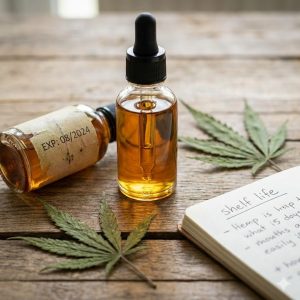
Is your CBD still good? Checking the expiration date and physical signs of spoilage is crucial for safety.
The Shelf Life of CBD: What to Expect
When we talk about CBD “expiring,” we are usually referring to potency degradation rather than food spoilage. Over time, the chemical compounds in the oil break down. The general consensus is that a high-quality CBD oil will remain stable and effective for 1 to 2 years if stored correctly.
However, this timeline isn’t a hard rule. Several factors influence exactly how long your bottle will last:
Quality of Ingredients: Higher quality, purer extracts tend to last longer.
Extraction Method: CO2 extraction generally produces a more stable oil than solvent-based methods.
Packaging: Amber or dark blue glass bottles protect the oil from light better than clear plastic.
The Carrier Oil: This is often the first thing to go bad (more on this later).
If your bottle has passed the expiration date printed on the label, it doesn’t mean it instantly turns toxic. It simply means the manufacturer can no longer guarantee the cannabinoid content matches what is on the bottle.
The Sensory Check: 4 Signs Your CBD Has Gone Bad
Since you can’t see the chemical breakdown of cannabinoids with the naked eye, you have to rely on your senses. If you are unsure about an old bottle, perform this simple four-step inspection.
1. The Smell Test
Your nose is your best tool. Fresh CBD oil typically has an earthy, grassy, or nutty aroma (depending on whether it is full-spectrum or isolate). If the oil has spoiled, the smell will change drastically.
Sign of Spoilage: It develops a sour, rancid, or unpleasant odor. Think of the smell of old cooking oil or wet cardboard. If you catch a whiff of anything acrid, it’s time to toss it.
2. Appearance and Color
Hold the bottle up to the light. Fresh CBD oil is usually clear and viscous, with a gold to dark brown hue depending on the concentration.
Sign of Spoilage: Watch out if the oil becomes darker, cloudy, or shows separation. While some minor settling can happen in natural products, a “murky” look or distinct layers of sediment that don’t mix back in are red flags.
3. Consistency and Texture
CBD oil should be smooth and fluid.
Sign of Spoilage: If the liquid thickens, clumps, or changes texture significantly, it has likely degraded. If it looks sludgy or has chunky particles floating in it, do not consume it.
4. The Taste Test
If it passes the smell and sight tests but you are still unsure, place a tiny drop on your tongue.
Sign of Spoilage: If it tastes off or bitter in a way that is different from its usual profile, the carrier oil has likely gone rancid. Rancid oil often has a sharp, metallic, or soapy flavor.
Why Does CBD Expire? The Science of Degradation
To understand how to protect your CBD, you need to understand the enemies of cannabinoids. There are three main environmental factors that accelerate the breakdown of CBD oil:
1. Light (UV Radiation)
Ultraviolet (UV) rays are the biggest enemy of cannabinoids. Light exposure breaks down the chemical bonds in CBD, converting it into other compounds or rendering it inert. This is why premium CBD tinctures are almost always sold in amber or dark-colored glass bottles—these act as a filter to block harmful UV rays.
2. Heat
Heat acts as a catalyst for chemical reactions. If you leave your CBD in a hot car or on a windowsill above a radiator, the heat speeds up the degradation process, causing the cannabinoids to break down much faster than they would at room temperature.
3. Air (Oxidation)
Oxidation is the process that turns sliced apples brown. The same thing happens to your oil. Every time you open the bottle, you introduce oxygen. Over time, this oxygen alters the chemical balance of the oil and the carrier liquid, leading to reduced potency and spoilage.
The Role of Carrier Oils
It is important to remember that a bottle of CBD oil is mostly carrier oil (the liquid that dilutes the CBD extract). Often, it is the carrier oil that goes bad before the CBD itself.
MCT Oil (Coconut): This is one of the most stable carrier oils. It has a high content of saturated fats, which makes it resistant to oxidation. CBD in MCT oil often lasts the longest.
Hempseed & Olive Oil: These are healthy, natural options, but they are less stable than MCT oil. They contain polyunsaturated fats which are more prone to oxidation. If your CBD is suspended in hempseed oil, you may find it spoils faster if not stored strictly according to guidelines.
How to Store CBD Oil to Make it Last Longer
Proper storage is the single most effective way to extend the life of your product. By controlling the environment, you can push that shelf life closer to the 2-year mark.
Keep it Cool
Temperature stability is key. You should store your CBD at room temperature, ideally between 68°F and 77°F (20°C – 25°C).
Avoid: Glove compartments, windowsills, or cabinets directly above your stove/oven.
Keep it Dark
Avoid direct sunlight and bright lights.
Best Spot: A medicine cabinet, a pantry, or a drawer. Even if your bottle is dark glass, prolonged exposure to strong light can still penetrate and degrade the contents.
Keep it Sealed
Air exposure kills freshness. Ensure the lid is tightly closed immediately after every use.
Tip: Wipe the rim of the bottle after use. Oil residue on the rim can prevent the cap from sealing perfectly, allowing air to seep in over time.
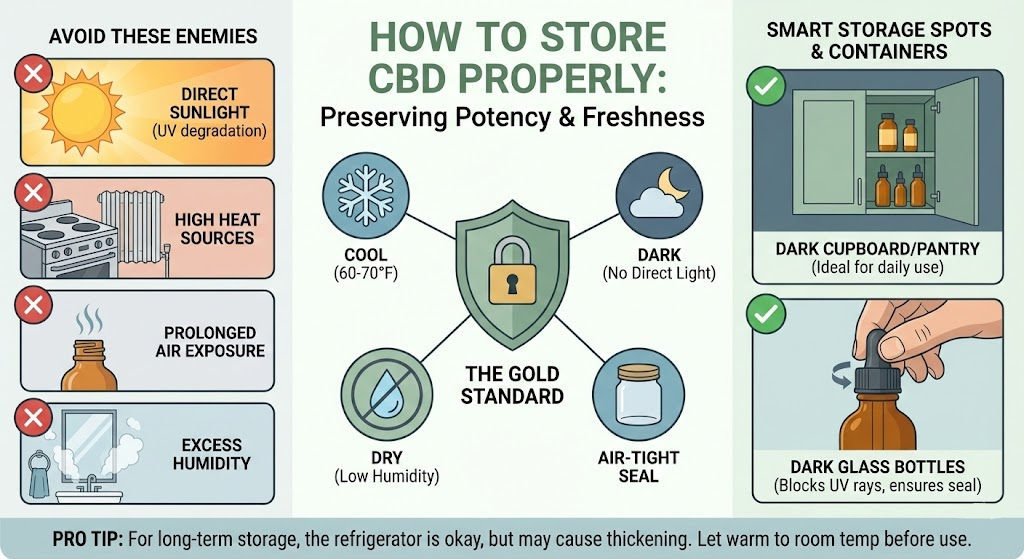
Protect your potency: A visual guide to the enemies of CBD and the best places to store your bottle.
Should You Refrigerate CBD Oil?
This is a common question. While refrigeration is not strictly necessary for MCT-based oils, it can help extend the shelf life of oils with less stable carriers like hempseed oil. However, keep in mind that cold temperatures can cause the oil to thicken or turn cloudy. If you store it in the fridge, you may need to let it sit at room temperature for 15 minutes before using it so it flows smoothly again.
Note: If you find liquid storage too difficult to manage, consider switching to CBD Capsules, which are hermetically sealed and generally have a longer, more stable shelf life.
What Happens if You Use Expired CBD Oil?
So, you took a dose before checking the date. Should you panic?
Generally, no. Consuming expired CBD oil is rarely dangerous. You likely won’t get sick from it, assuming there is no mold or bacteria growth inside the bottle (which is rare in oil-based products). The “rancid” flavor of spoiled carrier oil is unpleasant, but usually harmless in small quantities.
The real issue is efficacy. As CBD degrades, it loses its ability to interact with your endocannabinoid system. This means the CBD’s potency will have decreased, and you won’t get the full effects you expect. If you are taking CBD for anxiety, pain, or sleep, an expired dose might simply do… nothing.
Summary: The Freshness Checklist
To ensure you are always getting the best experience, follow this simple checklist:
Check the Date: Look for the “Best By” or expiration date on the bottle.
Store Properly: Keep it in a cool, dark cupboard away from heat and light.
Tighten the Cap: Never leave the bottle open for longer than necessary.
Trust Your Senses: If it smells sour, looks clumpy, or tastes bitter, replace it.
Treat your CBD oil like you would a high-quality olive oil or a fine spice. With a little care, you can ensure that every drop remains as potent and effective as the day you bought it.
Need to replace an old bottle? If your current supply has seen better days, don’t waste your time with inactive oil. Browse our selection of Fresh CBD Oils & Tinctures to restock with premium, lab-tested products guaranteed to deliver the results you deserve.