
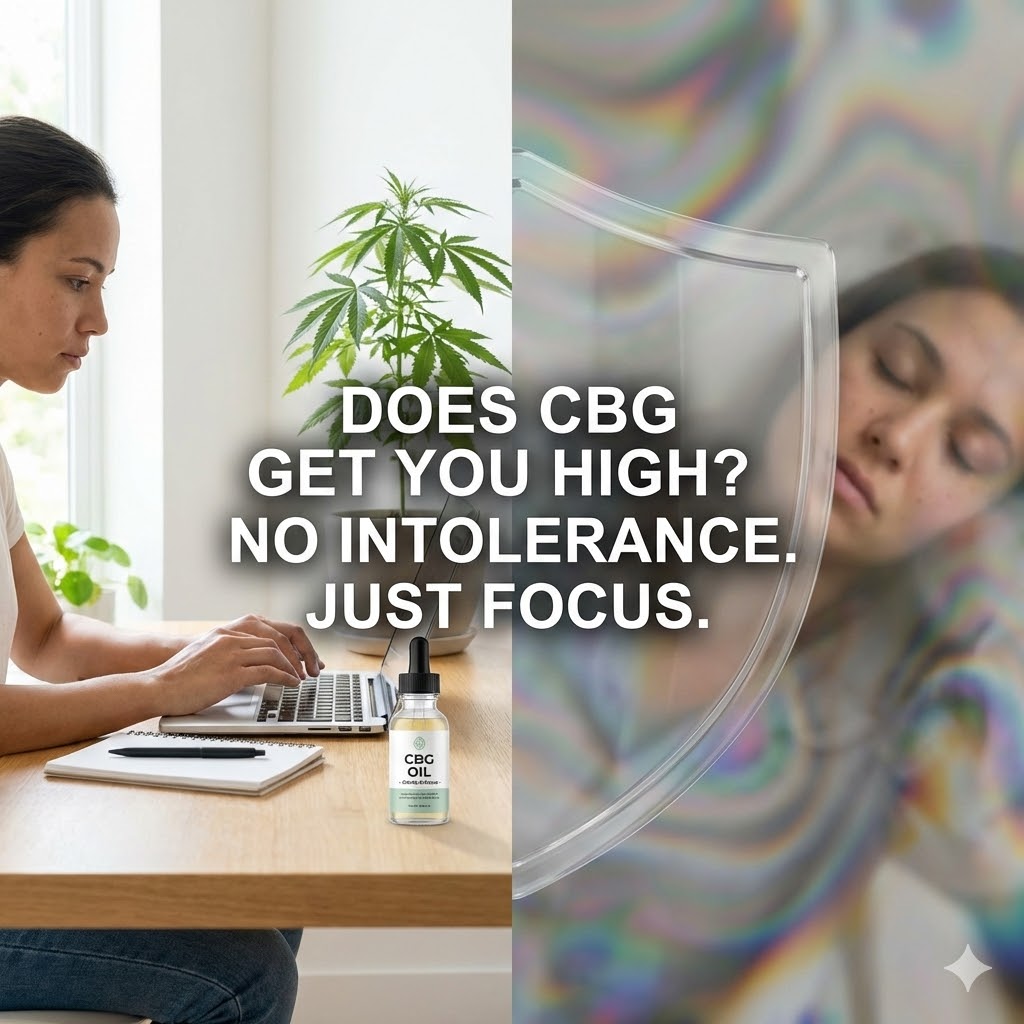

Does CBG Get You High?
Does CBG Get You High?
In the rapidly expanding world of cannabis wellness, the alphabet soup of cannabinoids can be confusing. First, there was THC, the compound famous for its intoxicating effects. Then came CBD, the non-psychoactive darling of the wellness industry. Now, a new player has entered the chat: CBG (Cannabigerol).
Marketed as a powerhouse for focus, energy, and gut health, CBG is popping up in tinctures, gummies, and vape cartridges across Canada. But for those curious about trying it, one burning question remains: Does CBG get you high?
The short answer is no.
However, the long answer is far more interesting. While CBG won’t leave you “stoned” or glued to your couch, it does produce a distinct feeling that many users describe as a “mental upgrade.”
In this guide, we will dive deep into the science of CBG, explain why it doesn’t intoxicate you, and describe exactly what it does feel like so you can decide if it’s right for your routine.
Pure Focus: CBG offers the mental clarity needed for productivity without the “high” or sedation of other cannabinoids.
What is CBG? (The Origin Story)
To understand why CBG behaves the way it does, you have to understand where it comes from.
CBG stands for Cannabigerol. In the cannabis community, it is often referred to as the “Mother of All Cannabinoids.” This isn’t just a marketing nickname; it is biological fact.
All cannabinoids start life as CBGa (Cannabigerolic Acid). As the hemp plant matures and is exposed to UV light and heat, enzymes break this “mother” molecule down.
Some of it becomes THCa (which turns into THC).
Some of it becomes CBDa (which turns into CBD).
Some of it becomes CBCa.
By the time a cannabis plant is ready for harvest, almost all the CBG has been converted into other compounds. In most strains, the final CBG content is less than 1%. This scarcity is why CBG products were historically rare and expensive—it takes a lot of biomass (or specialized genetics) to extract enough of it to make a bottle of oil.
Because it is the precursor to both THC and CBD, it shares characteristics with both, yet it remains chemically unique.
The “High” Question: Why Doesn’t CBG Intoxicate You?
To understand the “high,” we have to look at the Endocannabinoid System (ECS). Your body is filled with receptors, primarily CB1 (found in the brain and central nervous system) and CB2 (found in the immune system and gut).
THC vs. CBG: The Receptor War
THC (The Intoxicant): THC gets you high because it binds perfectly and aggressively to the CB1 receptors in your brain. It hijacks the system, altering your perception of time, memory, and pleasure.
CBG (The Regulator): CBG interacts with these same receptors, but in a completely different way. While it does bind to CB1 receptors (unlike CBD, which mostly just hangs around them), it acts as a competitive antagonist or partial agonist.
In plain English? CBG parks itself in the receptor but doesn’t “turn the key” to trigger psychoactivity. In fact, by parking there, it can actually block THC from binding. This means that not only does CBG not get you high, but it can also dampen the intoxication of THC if consumed together.
So, is it “Psychoactive”?
Technically, yes. Any substance that affects the brain is “psychoactive” (including coffee and chocolate). However, in the cannabis industry, we distinguish between psychoactive (affects the brain) and intoxicating (impairs judgment/motor skills).
CBG is psychoactive (it affects mood and focus), but it is non-intoxicating.
If It Doesn’t Get Me High, What Does It Feel Like?
This is where the magic happens. Just because you aren’t “stoned” doesn’t mean you don’t feel anything.
Users who take therapeutic doses of CBG (10mg–25mg) often report a sensation that is distinct from CBD. While CBD is often described as “the absence of negative feelings” (less anxiety, less pain), CBG provides a more active presence.
Here are the most common descriptors for the “CBG feeling”:
1. The “Flow State”
The most reported effect is a sense of sharp mental clarity. It is often compared to the focus you get from a cup of coffee, but without the jittery physical energy or the eventual crash.
The Feeling: The brain fog lifts. You feel alert, present, and capable of organizing your thoughts.
Why: Research suggests CBG increases anandamide (the “bliss molecule”) in the brain and may act as a neuroprotectant, supporting cognitive function.
2. Physical Relaxation (Without the “Couch Lock”)
While THC-heavy Indicas can make your limbs feel like lead, CBG offers a lighter physical relaxation.
The Feeling: A release of tension in the shoulders and jaw. Your body feels loose, but you still have the energy to go for a run or clean the house.
Why: CBG is a potent muscle relaxant and GABA uptake inhibitor, meaning it helps calm the nervous system’s physical response to stress.
3. Mood Elevation
It won’t give you the euphoria or giggles of THC, but many users report a subtle mood lift.
The Feeling: A “sunny” disposition. Problems seem more manageable, and social anxiety is dampened.
CBG vs. CBD vs. THC: The Comparison
To clarify where CBG fits in your toolkit, let’s compare it to its famous siblings.
| Feature | THC | CBD | CBG |
| Intoxicating? | Yes (High) | No | No |
| Primary Feeling | Euphoria, sedation, hunger, sensory alteration. | Calm, subtle relaxation, sleepiness (high doses). | Alertness, focus, mental clarity. |
| Best For | Sleep, severe pain, appetite stimulation, recreation. | General anxiety, inflammation, sleep. | ADHD-like symptoms, gut health, daytime pain. |
| Appetite | Increases (Munchies). | Neutral / Suppresses slightly. | Increases (Without the high). |
| Time of Day | Evening / Night. | Anytime / Evening. | Morning / Afternoon. |
The Top 5 Benefits of CBG
Why are people swarming to buy this non-intoxicating cannabinoid? The research is still young, but early studies and anecdotal evidence point to five major areas where CBG shines.
1. Focus and Energy (The Natural Nootropic)
This is the #1 reason people buy CBG today. Because it boosts anandamide and interacts with adrenergic receptors (involved in focus), it is being hailed as a natural alternative to caffeine or synthetic focus aids. It is perfect for the “afternoon slump.”
2. Gut Health (IBS and Inflammation)
The gut is lined with cannabinoid receptors. Studies have shown that CBG is particularly effective at reducing inflammation in the colon.
The Science: A 2013 study on mice found that CBG reduced the effect of chemically induced inflammatory bowel disease (IBD). Many users with IBS report significant relief from cramping and urgency when using CBG oil.
3. Pain and Muscle Relief
CBG is a GABA uptake inhibitor. GABA is a neurotransmitter that blocks impulses between nerve cells in the brain. By inhibiting its uptake, CBG may produce a muscle-relaxing effect that is stronger than CBD, making it ideal for workout recovery or menstrual cramps.
4. Appetite Stimulation
Usually, “the munchies” require getting high on THC. However, a 2016 study found that CBG stimulated appetite in rats without any psychoactive effects. This is a game-changer for people undergoing chemotherapy or struggling with appetite loss who do not want to be intoxicated during the day.
5. Eye Health
The eyes have a high concentration of receptors. Older research suggests CBG may be effective at reducing intraocular pressure, making it a potential candidate for supporting glaucoma treatment (though you should always consult an optometrist).
Are There Any Side Effects?
Because CBG is non-intoxicating, it is generally considered very safe and well-tolerated. However, taking too much (mega-dosing) can lead to mild side effects:
Dry Mouth: Like THC, CBG can inhibit saliva production.
Drowsiness: While usually alerting, massive doses can overwhelm the system and cause sleepiness.
Digestive Changes: Since it actively targets the gut, some users may experience mild digestive shifts when they first start.
Drug Interactions: Like CBD, CBG is metabolized by the liver. If you are taking medication that carries a “grapefruit warning” (such as blood thinners), consult your doctor before adding CBG to your regimen.
Will CBG Cause a Failed Drug Test?
This is a critical question for many professionals.
Pure CBG should not cause you to fail a standard drug test. Standard workplace drug panels look specifically for THC-COOH, the metabolite of THC. They do not look for CBG or CBD.
The Caveat:
Most CBG products are “Full Spectrum,” meaning they contain trace amounts of THC (less than 0.3% in hemp products, or varying amounts in Canadian regulated products).
If you use a Full Spectrum CBG oil, those trace amounts of THC can accumulate in your body over time and potentially trigger a positive result.
The Solution: If you are subject to drug testing, stick to CBG Isolate (pure powder) or Broad Spectrum products that guarantee 0.0% THC.
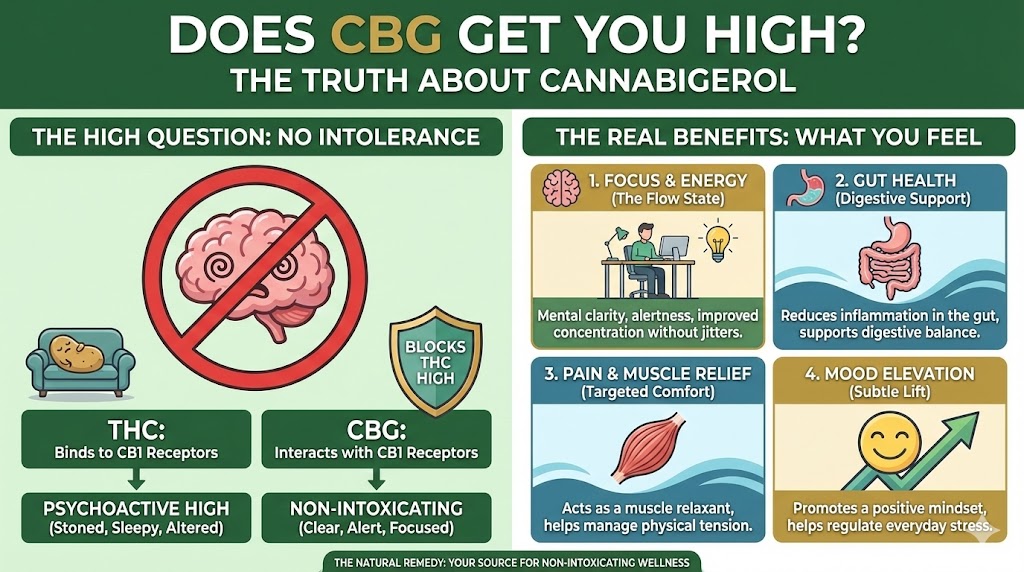
The Biological Truth: While THC binds to receptors to create a high, CBG interacts to improve focus and body function without the buzz.
How to Use CBG
Ready to try the “Mother of Cannabinoids”? Here are the best ways to consume it.
1. CBG Oil Tinctures
The most popular method. You place drops under your tongue and hold them for 60 seconds before swallowing.
Pros: Easy dosing, high bioavailability, systemic effects.
Best Use: Daily morning routine for focus.
2. Gummies
Tasty and convenient, but slower to kick in (45–90 minutes).
Pros: Discreet, long-lasting effects.
Best Use: Sustained gut health support or chronic pain management.
3. Vapes
Inhaling CBG offers near-instant effects.
Pros: Immediate clarity.
Best Use: “Emergency” focus when you need to crunch on a deadline, or sudden migraine relief.
4. The “Entourage” Stack (CBG + CBD)
Many users find that CBG works best when paired with CBD. A 1:1 ratio is considered the “Golden Ratio” for wellness. The CBD handles the background anxiety and inflammation, while the CBG provides the mental spark and pain targeting.
Conclusion: The Final Verdict
So, does CBG get you high? No.
Is it worth trying? Absolutely.
If THC is the “party” cannabinoid and CBD is the “chill” cannabinoid, think of CBG as the “performance” cannabinoid. It is the tool for the person who wants to be present, productive, and pain-free without altering their perception of reality.
Whether you are a student looking for a study aid, an athlete needing recovery support, or simply someone who finds THC too overwhelming, CBG offers a unique, sober pathway to wellness.