

Important Stats for THC
Beyond THC: What Are the Most Important Stats for Weed?
Looking beyond the label to find true top-shelf quality.
For decades, purchasing cannabis was a guessing game. You got what was available from a local source, and you judged its quality purely by how it looked and smelled in a plastic baggie. Today, thanks to regulated markets, advanced lab testing, and an increasingly sophisticated craft cannabis industry, we have access to an overwhelming amount of data on every single jar, pouch, and pre-roll we buy.
But this abundance of scientific information has created a new problem for consumers: number chasing. Walk into any dispensary or browse any online menu, and you will inevitably see consumers making their purchasing decisions based entirely on one single question: "What's your highest THC strain?"
While THC (Tetrahydrocannabinol) is undeniably the primary psychoactive compound in cannabis—the engine that drives the vehicle—judging a strain solely by its THC percentage is a fundamentally flawed approach. It is akin to buying wine based only on its alcohol content, completely ignoring the flavor, the vintage, the terroir, or the craftsmanship of the winemaker. If you buy a bottle of Everclear, you will certainly get intoxicated, but you wouldn't call it a premium drinking experience. The same logic applies to cannabis.
If you want to truly elevate your cannabis experience and find the flower that gives you the exact effects you desire—whether that is deep physical relaxation, creative cerebral energy, or targeted pain relief—you need to know how to read the entire label. In this comprehensive guide, we are going to decode the complex world of cannabis statistics and highlight the most important factors to look for when choosing your next top-shelf strain.
The THC Fallacy: Why High Numbers Don't Mean High Quality

Before we dive into the stats that do matter, we must address the elephant in the room: THC inflation. Over the past few years, the cannabis industry has been locked in a "THC arms race." Because consumers have been conditioned to believe that higher THC equals better weed, producers are financially incentivized to produce test results that breach the 30% or even 35% mark.
Biologically speaking, there is a physical ceiling to how much THC a cannabis flower can hold. A bud is made of plant matter (cellulose, water, chlorophyll, waxes) and trichomes (the resin glands holding the cannabinoids). For a flower to legitimately test at 35% THC, more than a third of the physical weight of that flower would have to be pure THC resin. While not impossible in highly concentrated extracts, in raw flower, these numbers are often the result of lab variance or "moisture content manipulation" (testing the bud when it is bone-dry to artificially inflate the ratio of cannabinoids to plant weight).
More importantly, breeding cannabis exclusively for high THC often comes at the direct expense of terpene production and other beneficial cannabinoids. A plant only has so much biological energy; if it spends it all pushing THC to 32%, it leaves very little energy to produce the essential oils that actually make the high enjoyable.
"A craft strain testing at 22% THC with a rich, robust 3.5% total terpene profile will almost always provide a more profound, enjoyable, and longer-lasting high than a commercially grown strain testing at 30% THC with less than 1% terpenes. Flavor equals feeling."
1. The Terpene Profile (The Steering Wheel)
If THC is the engine that provides the horsepower for your high, terpenes are the steering wheel that dictates the direction of the trip. Terpenes are the aromatic essential oils produced in the plant's trichomes. They are not unique to cannabis; they are found throughout nature. Limonene is what makes lemons smell like citrus, and Pinene is what gives pine needles their sharp scent.
In cannabis, terpenes are responsible for the distinct smells of different strains—why a Gas Mac AAAA smells like pungent diesel fuel, while a strain like Pink Runtz smells like sweet, fruity candy. But their role goes far beyond aroma.
Through a phenomenon known as the Entourage Effect, terpenes interact synergistically with THC and your body's endocannabinoid system to modulate and shape the high. This is why one 24% THC strain might make you want to clean your entire house, while another 24% THC strain might glue you to the couch.
Key Terpenes to Look For:
- Myrcene (Earthy/Musky/Clove): The most abundant terpene in modern cannabis. Myrcene dictates the classic "Indica" effect. It is known for its sedative, relaxing, and muscle-soothing properties. If you want "couch-lock," look for a profile dominant in Myrcene.
- Limonene (Citrus/Lemon): Highly uplifting, mood-elevating, and stress-relieving. Excellent for daytime use, socializing, and fighting anxiety or depressive moods.
- Caryophyllene (Peppery/Spicy): This is a fascinating compound because it is the only known terpene that also acts as a cannabinoid, binding directly to CB2 receptors in the body. It is highly anti-inflammatory and excellent for gastrointestinal issues and physical pain relief.
- Pinene (Pine/Woody): Promotes focus, alertness, and memory retention. Often found in cerebral Sativas. Interestingly, Pinene can help counteract the short-term memory loss often associated with THC consumption.
- Linalool (Floral/Lavender): Known for its profound calming and anti-anxiety effects. Often utilized by medical patients dealing with severe stress, insomnia, or convulsions.
- Terpinolene (Fruity/Floral/Herbal): Often found in classic, energetic Sativas. It provides a complex, fresh aroma and is associated with a highly cerebral, uplifting, and creative buzz.
When shopping, look for strains that display their terpene percentage. Anything above 2.0% total terpenes is generally considered high-quality, flavorful flower. Anything above 3.5% is exceptional craft quality.
2. Minor Cannabinoids (The Supporting Cast)
THC hogs the spotlight, but the cannabis plant is a complex chemical factory capable of producing over 100 different cannabinoids. While they exist in much smaller concentrations than THC, the presence of minor cannabinoids can drastically alter the texture and medicinal benefits of your experience.
- CBD (Cannabidiol): The most famous non-intoxicating cannabinoid. CBD acts as a modulator for THC. It effectively "lowers the ceiling" of the high, counteracting the paranoia, racing heart, and anxiety that high-THC strains can sometimes cause. A strain with a 1:1 or 2:1 THC-to-CBD ratio provides a deeply relaxing, clear-headed buzz perfect for functional daytime relief.
- CBG (Cannabigerol): Often referred to as the "mother of all cannabinoids" because it is the chemical precursor from which THC and CBD are synthesized. CBG is highly antibacterial, reduces intraocular pressure (great for glaucoma), and is gaining massive fame for its uplifting, neuro-protective, and intensely focus-driven effects.
- CBN (Cannabinol): The ultimate sleep aid. CBN is actually a degradation product; it is created when THC is exposed to oxygen and light over time. If a product has a high CBN percentage, or if you are smoking an older, deeply cured batch of heavy indica like Donkey Butter AAA+, it will make you incredibly drowsy.
- THCV (Tetrahydrocannabivarin): A rare and highly sought-after minor cannabinoid found mostly in landrace African Sativas. THCV produces a very fast-acting, energetic, and clear-headed high. Uniquely, it has been shown to act as an appetite suppressant, earning it the nickname "diet weed."
Understanding THCA vs. THC
If you look closely at a lab test, you will rarely see high levels of "THC" on raw flower. Instead, you will see high levels of THCA (Tetrahydrocannabinolic acid). THCA is the raw, acidic precursor to THC and is completely non-psychoactive. You could eat a raw bud testing at 25% THCA and you would not get high. It only turns into intoxicating Delta-9 THC when exposed to heat through a process called decarboxylation (i.e., when you spark a lighter to your joint or heat up your vaporizer).
3. Harvest Date, Packaging Date & Moisture
Cannabis is, at its core, an agricultural product. It is a flower. And like all flowers, herbs, or produce, it has a distinct shelf life. The most potent, genetically perfect, terpene-rich flower in the world will smoke terribly if it is a year old and has dried out to the consistency of dust.
Freshness matters immensely. When cannabis ages, several chemical processes occur. The volatile terpenes—especially the lighter, fruitier ones—begin to evaporate off the flower, degrading the flavor and the nuance of the high. Furthermore, as mentioned earlier, the THC begins to slowly oxidize into sleep-inducing CBN.
The "Goldilocks" Zone (1-4 Months)
- Texture: Sticky and spongy. The bud should lightly compress when squeezed and slowly expand back to its original shape.
- Aroma: Vibrant and "loud." The smell should immediately fill the room when the jar is cracked.
- Smoke: Smooth, expanding in the lungs without severe irritation. Leaves a clean, light grey or white ash.
- Effects: Maximum terpene preservation translates to a dynamic, full-spectrum high.
Aged/Degraded Cannabis (6+ Months)
- Texture: Brittle and overly dry. Crumbles easily to dust when pinched without a grinder.
- Aroma: Muted, often taking on a generic earthy, "hay-like," or "tea" smell as terpenes evaporate.
- Smoke: Harsh, hot smoke that irritates the back of the throat and causes coughing fits. Burns too quickly.
- Effects: One-dimensional, lethargic high due to terpene loss and THC degrading into CBN.
Always check the packaging date. While a Boveda or Integra humidity pack can help preserve moisture for an extended period, nothing beats fresh, properly cured flower.
4. Genetics, Lineage, and the Breeder
While the terms "Indica" and "Sativa" are still the most common way dispensaries categorize weed, modern botany and genetic testing have shown us that these labels are botanically inaccurate. Due to decades of cross-breeding, almost everything on the market today is a Poly-hybrid. What matters far more than a broad Sativa/Indica label is the specific lineage of the plant.
Understanding genetics is the ultimate cheat code for consistently buying weed you love. If you know you respond incredibly well to the deeply relaxing, earthy, and pain-relieving effects of the "Kush" family, you should actively look at the genetic lineage of a new strain. For example, a heavy hitter like Kashmir Kush (a cross of Triangle Kush x Maven OG) will deliver the exact stats and medicinal effects you are looking for, guaranteeing satisfaction regardless of what the THC percentage on the label says.
Learn to identify the families: The Cake/Cookie family (sweet, doughy, deeply euphoric), the Diesel/Chem family (gassy, pungent, high-energy), the Haze family (spicy, cerebral, racy), and the Purple/Granddaddy family (grape, floral, highly sedative).
5. Visual Cues & "Bag Appeal"
While lab stats are crucial, your eyes are still one of your best tools. "Bag appeal" isn't just about looking pretty; it indicates plant health and harvest timing.
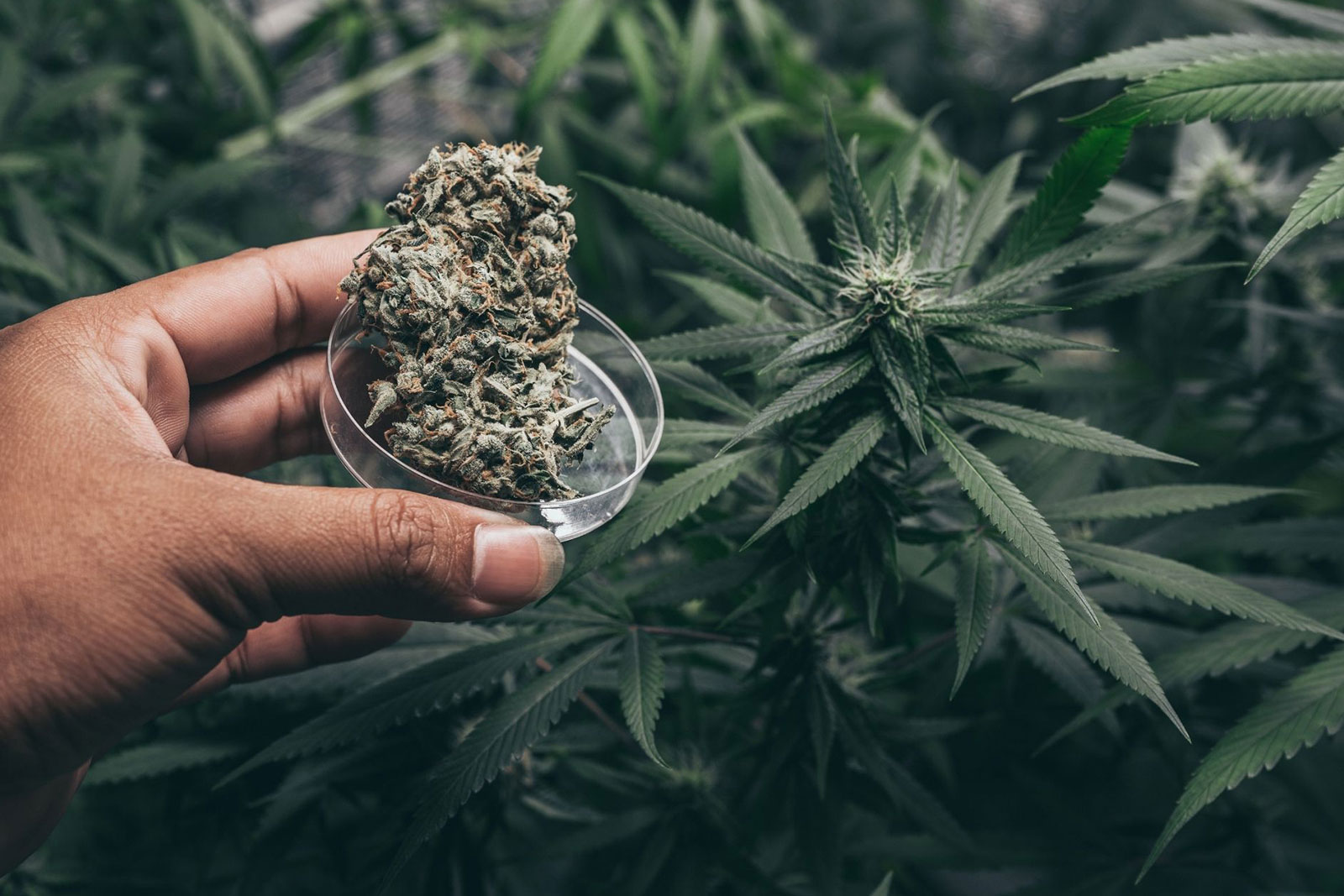
- Trichome Density: The bud should look like it is coated in a layer of refined sugar or frost. These are the resin glands holding the stats you care about.
- Trichome Color (If you have a magnifying glass): Clear trichomes mean the plant was harvested too early (racy, short-lived high). Milky/Cloudy trichomes indicate peak THC levels (euphoric, balanced high). Amber trichomes indicate the THC is degrading into CBN (heavy, sedative, couch-lock high).
- Bud Structure: Premium AAAA flower should have a dense, tight structure (though Sativas can naturally be slightly more airy). It should be properly trimmed, without an excess of sugar leaves hiding the actual calyxes.
The Ultimate Consumer Checklist
| What to Check | Why It Matters | The "Gold Standard" |
|---|---|---|
| Terpene Profile & % | Dictates flavor, aroma, and the specific "type" of high via the Entourage Effect. | Anything over 2.0% total terpenes, with a profile matching your desired effects. |
| Packaging Date | Ensures proper moisture content, prevents harsh smoke, and guarantees terpene retention. | Packaged within the last 1 to 4 months. |
| Lineage (Genetics) | Tells you the historical background of the plant and provides a reliable roadmap for expected effects. | Recognizable, stable parent strains that align with your personal physiological preferences. |
| Visual Trichome Health | Indicates if the plant was harvested at peak ripeness and handled delicately post-harvest. | A dense, undisturbed coating of milky-white (with a touch of amber) resin heads. |
| THC Percentage | Indicates the baseline potency and strength of the psychoactivity. | 20% - 28% (When paired with a robust terpene profile). |
The Final Verdict: Shop Smarter
The next time you are shopping for flower, try a radical experiment. Instead of sorting the menu by "Highest THC to Lowest," ignore the THC number entirely for your first pass.
Look for strains with lineage that excites you. Look for the most prominent, complex terpene profiles available. Ask for the freshest batch that just arrived from the cultivator. If you focus on the complete, holistic profile of the plant—terpenes, freshness, genetics, and minor cannabinoids—you will graduate from simply "getting high" to curating a truly premium, personalized cannabis experience that hits exactly the way you want it to, every single time.
Shop by the Stats that Matter
At The Natural Remedy, we pride ourselves on absolute transparency and rigorous quality control. Our AAAA+ craft strains are carefully selected for their rich terpene profiles, pristine genetics, dense trichome coverage, and guaranteed freshness. Stop chasing inflated numbers and start experiencing true craft quality.
Explore Our AAAA+ Strains