

Dry Sift vs. Freeze-Dried Hash
Dry Sift vs. Freeze-Dried Hash: The Ultimate Guide to Solventless Extracts
The world of cannabis concentrates has evolved exponentially over the last decade. As consumers become more health-conscious and flavor-focused, the demand for solventless extracts has skyrocketed. Two of the most highly debated and sought-after forms of solventless concentrates are dry sift hash and freeze-dried hash (often processed into live rosin). But what exactly sets them apart?
Whether you are an old-school traditionalist who loves the crumbly, earthy texture of traditional hash, or a modern terpene chaser looking for the purest, pale-golden dabbable melt, understanding the extraction process is crucial. Both methods utilize mechanical separation rather than chemical solvents like butane or ethanol, meaning you are consuming the pure essence of the cannabis plant.
In this comprehensive guide, we will break down the science, the history, the production methods, and the unique benefits of dry sift versus freeze-dried hash so you can make an informed decision on your next session.
The Science of the Trichome
Before diving into extraction methods, we must understand what we are actually extracting: the trichome. Trichomes are the microscopic, mushroom-shaped resin glands that coat the surface of cannabis flowers and sugar leaves. These fragile little factories are responsible for producing the cannabinoids (like THC and CBD) and terpenes (the essential oils that give cannabis its unique smell and flavor).
The ultimate goal of any hash-making process is to separate these trichome heads from the fibrous plant material (the stalk and leaf) without degrading them. The less plant material (chlorophyll, lipids, waxes) in the final product, the higher the quality, purity, and "melt" of the hash. When starting with top-tier AAAA genetics like a perfectly cured Cadillac Rainbows, the resulting hash will possess an incredibly complex and potent profile.
What is Dry Sift Hash?
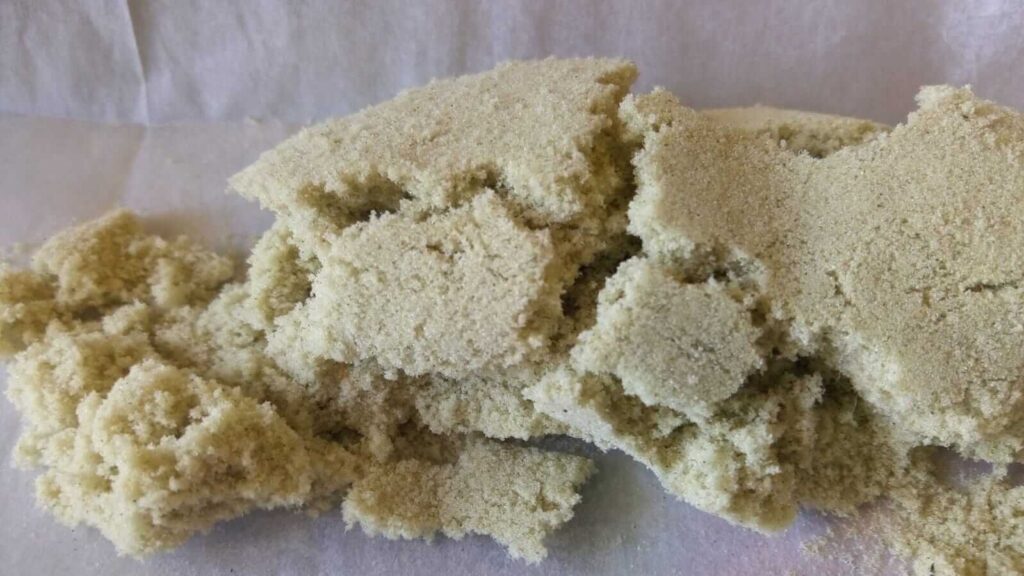
Dry sift is exactly what it sounds like: a solventless concentrate created by sifting dried cannabis material over a series of fine mesh screens. It is one of the oldest methods of hash production in the world, with roots tracing back centuries to regions like Morocco, Lebanon, and Afghanistan, where it was traditionally known as "kief" before being pressed into solid bricks.
The Dry Sift Process
The modern dry sift process is a refined version of these ancient techniques. Extractors use a series of specialized screens, usually measured in lines per inch (LPI) or microns (µ).
- Agitation: Dried and cured cannabis trim or whole flowers are gently agitated (rubbed, bounced, or tumbled) over the top screen.
- Separation: The agitation breaks the brittle trichome heads off their stalks. The trichome heads are small enough to fall through the microscopic holes in the screen, while the larger plant material is left behind.
- Refinement: The material is passed through successively smaller screens (e.g., 149-micron, 104-micron, 73-micron). The "sweet spot" for the highest quality, full-melt dry sift usually collects on the 73-micron to 90-micron screens, as this perfectly matches the size of mature, resin-filled trichome heads.
To achieve true "six-star" (full melt) dry sift, extractors often employ an advanced technique called "Static Tech." By using static electricity, they can pull microscopic plant contaminants away from the resin glands, leaving behind a product that is 99.9% pure trichome heads.
Pros and Cons of Dry Sift
The Pros
- Incredible Cured Terpene Profile: Because it uses cured material, it captures the deep, complex flavors of aged cannabis.
- No Moisture Issues: Since no water is introduced, there is zero risk of mold if stored properly.
- Accessible to Make: It requires minimal equipment compared to freeze-drying.
The Cons
- Harder to Perfect: Achieving true dab-quality full melt dry sift is incredibly difficult and labor-intensive.
- Lower Yields of Top Tier: You get very little six-star hash from dry sifting compared to washing.
- Oxidation: Cured trichomes have already been exposed to oxygen, meaning some volatile terpenes are lost.
What is Freeze-Dried Hash (Ice Water Hash)?
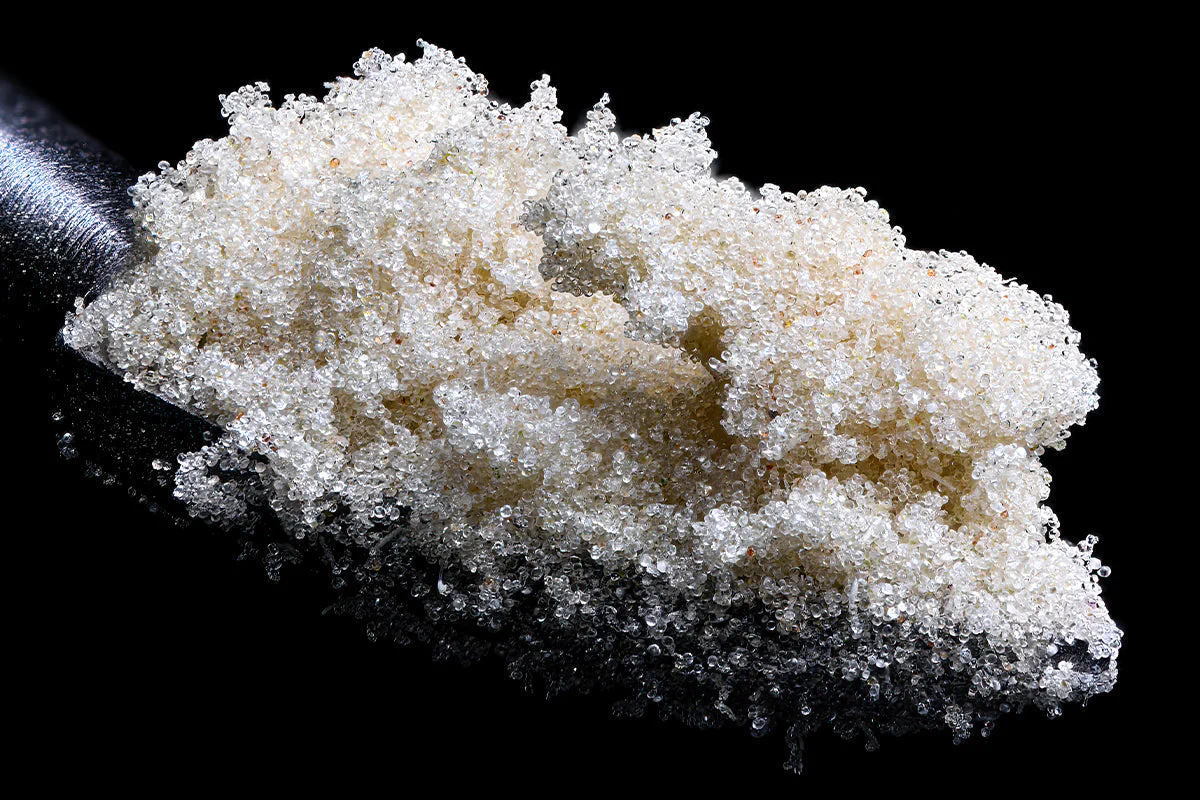
When you hear the term "freeze-dried hash," it almost always refers to ice water hash (also known as bubble hash) that has been dried using a pharmaceutical-grade freeze dryer (lyophilizer). This represents the cutting edge of cannabis extraction technology.
Unlike dry sift, which uses cured bud, freeze-dried hash is typically made from Fresh Frozen material. The moment the cannabis plant is harvested, it is vacuum-sealed and thrown into a deep freezer. This locks in the "live" terpene profile—the volatile, light compounds that give the living plant its intense aroma but usually evaporate during a standard drying and curing process. Think of the vibrant, fruity nose on a fresh cut of Gastro AAAA+—fresh frozen extraction captures exactly that.
The Ice Water and Freeze-Drying Process
- The Wash: The fresh frozen cannabis is submerged in a vessel filled with ice and ice-cold water. In this near-freezing environment, the trichomes become incredibly brittle.
- Agitation: The water is gently stirred. The cold water snaps the trichome heads off without breaking down the plant material (which stays flexible because it is wet).
- Filtration: The trichome-rich water is drained through a series of "bubble bags" (mesh sieves) to catch different sizes of resin glands.
- The Freeze Dryer (The Magic Step): The collected wet hash is scooped onto trays and placed immediately into a freeze dryer. A freeze dryer lowers the temperature to well below freezing and creates a deep vacuum. Through a process called sublimation, the solid ice in the hash turns directly into a gas, bypassing the liquid phase entirely.
"The freeze dryer changed the hash game entirely. Before freeze dryers, hash makers had to air-dry their wet bubble hash in cold rooms for up to two weeks, which led to oxidation, darkening of the resin, and a loss of fragile terpenes. Freeze drying perfectly preserves the light color and volatile aromas in just 24 hours."
Pros and Cons of Freeze-Dried Hash
The Pros
- Maximum Terpene Preservation: Fresh frozen material + cold processing = the most flavorful extract possible.
- Stunning Appearance: It produces that coveted pale-golden, white-sand aesthetic.
- Purity: Water washing combined with cold temps pulls almost zero chlorophyll, resulting in a cleaner melt.
The Cons
- High Cost: Pharmaceutical freeze dryers and cold rooms cost thousands of dollars, making the final product expensive.
- Storage Requirements: Freeze-dried hash/rosin must be kept in a fridge or freezer to prevent it from "greasing up" and losing terpenes.
Head-to-Head Comparison
| Feature | Dry Sift Hash | Freeze-Dried (Ice Water) Hash |
|---|---|---|
| Starting Material | Dried and cured flower/trim | Usually Fresh Frozen (WPFF) |
| Extraction Medium | Air and physical agitation | Ice and water |
| Drying Method | None required (already dry) | Vacuum Lyophilization (Freeze Dryer) |
| Flavor Profile | Earthy, deep, complex, hashy | Vibrant, fruity, gassy, "live" plant taste |
| Consistency | Powdery, sandy, or pressed resin | Light crystalline sand, soft rosin batter |
How the Strain Impacts the Hash
It is an old adage in the extraction industry: "Fire in, fire out." You cannot make six-star freeze-dried hash or premium static dry sift from low-quality, old cannabis. The genetics and how the plant was grown dictate the size of the trichome heads, the density of the resin, and the stability of the terpenes.
For example, strains with dense, greasy trichome heads like Blue Gelato often perform incredibly well in ice water extraction. The thick cell walls of the trichomes protect the terpenes during the turbulent wash. Conversely, strains with very brittle, sandy trichomes often sift beautifully over dry screens, dropping pristine resin glands with minimal plant contamination.
Consumption Methods: How to Smoke Them
How you consume your hash depends largely on its grade. Hash is graded on a scale from 1 to 6 stars, denoting how well it melts when exposed to heat.
Consuming Dry Sift
Unless you are purchasing rare, expensive 6-star static sift, most dry sift falls into the 3 to 4-star range. This means there is still a tiny amount of plant matter present. Do not try to dab 3-star dry sift in an expensive quartz banger. It will leave behind a charred black residue (chazz). Instead, lower-grade dry sift is best consumed by:
- Topping a Bowl: Sprinkle a layer of sift over your ground flower in a bong or pipe. It acts as an incredible potency booster.
- Rolling in Joints: Mix it evenly with your flower to create a slow-burning, high-THC infused pre-roll.
- Pressing into Rosin: Many extractors take dry sift and press it between heated plates (a rosin press) to squeeze out the pure oil, making it completely dabbable.
Consuming Freeze-Dried Hash
Freeze-dried ice water hash is heavily refined. If it is sold as "Water Hash" or "Ice Wax," it is usually 5 or 6-star quality, meaning it is Full Melt.
- Dabbing: This is the ultimate way to experience freeze-dried hash. Use a quartz banger at a very low temperature (around 450°F - 500°F). Because freeze-dried hash has no plant matter, it melts into a clear puddle and vaporizes, leaving behind a massive burst of flavor and minimal cleanup.
- Hash Rosin: Most freeze-dried hash on the market today is actually taken one step further and pressed into Live Hash Rosin. This creates a stable, buttery concentrate that is easier to handle and dab than raw water hash.
The Verdict: Which is Better?
Declaring a definitive "winner" between dry sift and freeze-dried hash is impossible, as it comes down entirely to personal preference and what you intend to do with it.
Choose Dry Sift if: You love traditional cannabis flavors. You want an easy, affordable way to spike the potency of your joints and bowls. You appreciate the deep, cured terpene profiles of classic strains like Kashmir Kush and don't want to worry about storing your extracts in a refrigerator.
Choose Freeze-Dried Hash if: You are a flavor connoisseur with a dab rig. You want the absolute cleanest, purest representation of the living plant. You prefer fruity, bright, and gassy profiles and are willing to pay a premium for pharmaceutical-grade processing and cold-chain storage.
Ready to Experience the Best?
Whether you prefer flower, traditional hash, or the finest solventless concentrates, starting with AAAA+ material is key. Explore our premium strain collection to find the perfect profile for your palate.
Shop Premium Hash & Strains