

What Is CBC
What Is CBC
Last updated: June 9, 2026
TL;DR
CBC (cannabichromene) is one of the six major cannabinoids in cannabis – non-psychoactive, non-impairing, and increasingly studied for inflammation, pain, mood, and neuroprotection. It does not bind CB1 or CB2 receptors meaningfully but activates TRPA1 and TRPV1 pain channels and inhibits the body uptake of natural endocannabinoids. Found in tiny amounts (under 1%) in most flower, concentrated in some niche genetics. Pairs strongly with THC and CBD via the entourage effect.
What is CBC?
CBC stands for cannabichromene, a non-psychoactive cannabinoid that develops in cannabis from the same precursor (CBGa) as THC and CBD. It was first isolated in 1966 by Mechoulam and Gaoni at the same time they characterized THC, but has stayed in the background of cannabis research because most commercial strains produce very little of it. Modern selective breeding is starting to change that with CBC-dominant phenotypes appearing in research lines.
How is CBC different from CBD and CBG?
Three different molecules with overlapping but distinct effect profiles:
- CBD – modulates CB1 indirectly, anti-anxiety, anti-inflammatory, well-studied
- CBG – mild CB1/CB2 activity, anti-inflammatory, appetite stimulation, gut-protective
- CBC – barely interacts with CB receptors, activates TRP pain channels, neuroprotective via NGF support
We covered CBD pet applications and CBG previously – CBG vs CBD guide explains the overlap. CBC is the next cannabinoid down the curiosity ladder.
Does CBC get you high?
No. CBC has minimal affinity for CB1, the receptor responsible for THC psychoactivity. Pure CBC at any reasonable dose produces no impairment, no cerebral high, no body intoxication. It can be taken before driving, work, or anything else that requires full cognition. The mood-lift some users report comes from its interaction with anandamide and TRPV1, not CB1 binding.
What does CBC actually do?
Three documented mechanisms based on the available research:
- Anti-inflammatory – blocks COX-2 and reduces inflammatory cytokine release
- Pain relief – activates TRPA1 and TRPV1 channels involved in pain perception
- Neuroprotective – supports nerve growth factor (NGF) which may protect against neurodegeneration
- Mood – blocks anandamide reuptake, mildly elevating the body endogenous bliss molecule
Most of this research is preclinical (cell line and animal). Robust human trials are still rare because CBC is hard to isolate at scale.
How much CBC is in cannabis flower?
Most commercial flower tests 0.1-0.5% CBC. Old or sun-aged flower can creep up to 1% as CBGa converts. Some niche strains – Charlotte’s Web, ACDC, and some Type II CBD-heavy lines – test 1-3% CBC. Aged hash is often higher because CBGa continues to convert during the curing window. Our hash collection includes some aged imports where naturally elevated CBC is part of the profile.
What about CBC and the entourage effect?
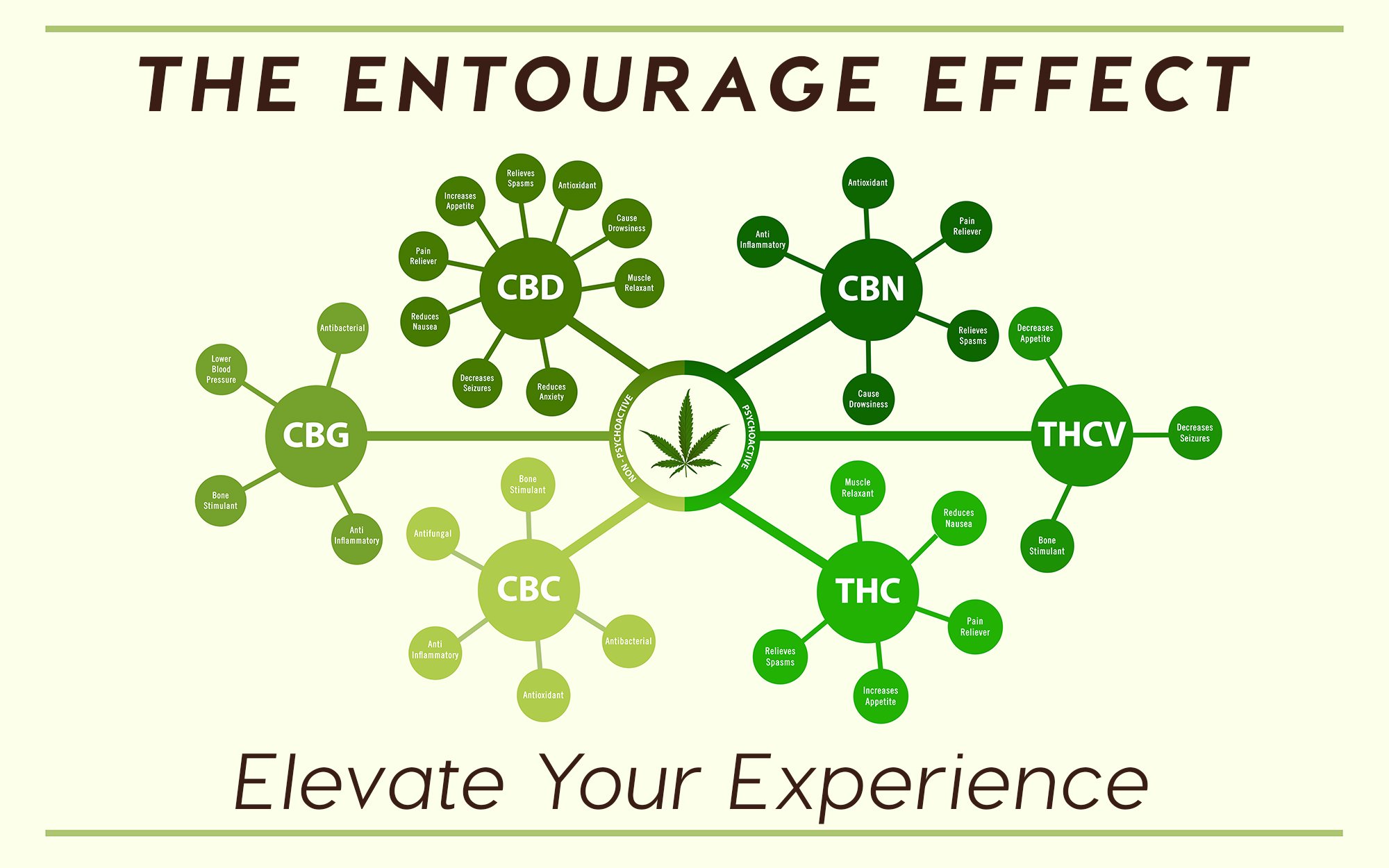
CBC pairs strongly with THC, CBD, and the terpene limonene. The triple combination produces stronger pain relief in animal studies than any single compound at equivalent dose. Full-spectrum extracts that include naturally occurring CBC often outperform CBD isolate for inflammation despite CBD being the headline ingredient. The entourage effect is the practical reason most reputable extracts are full-spectrum rather than isolated.
How do you take CBC?
Two main routes:
- Full-spectrum extract or oil – the easiest way, takes CBC alongside CBD and trace cannabinoids
- CBC isolate (rare) – sold as a research chemical, sublingual under-the-tongue, 5-30 mg dose
Pure CBC isolate is expensive and not commonly stocked. Most consumers will get their CBC through full-spectrum hash, flower, or tincture. We covered the broader CBD/cannabinoid landscape in our CBN guide – same logic applies to CBC.
What is the right dose?
No standardized human dose exists yet. Animal studies use 10-50 mg/kg, which scales roughly to 50-200 mg human equivalent. Most CBC tinctures on the market deliver 5-25 mg per serving. Realistic starting points:
- 5-10 mg twice daily for general anti-inflammatory effect
- 15-25 mg for mild pain or mood support
- Higher doses possible but cost-prohibitive without isolate access
CBC has no documented toxicity ceiling at human doses.
Will CBC show up on a drug test?
No. Standard workplace urine drug tests look for THC-COOH (the THC metabolite). Pure CBC does not trigger a positive. The catch is the same as with CBD: most CBC-containing products are full-spectrum extracts that include trace amounts of THC. If you are subject to testing, verify the COA shows zero THC.
Is CBC legal in Canada?
Cannabis-derived CBC products fall under the Cannabis Act and are legal when sold by licensed Canadian producers. Hemp-derived CBC with under 0.3% THC follows the industrial hemp pathway. Personal possession limits apply the same way they do for THC and CBD products. Federal classification details are at the Health Canada cannabis regulations page.
Sources
- DeLong GT, et al. Pharmacological evaluation of the natural constituent of Cannabis sativa, cannabichromene. Drug Alcohol Depend, 2010.
- Maione S, et al. Non-psychoactive cannabinoids modulate the descending pathway of antinociception. Br J Pharmacol, 2011.
- Shinjyo N, Di Marzo V. The effect of cannabichromene on adult neural stem/progenitor cells. Neurochem Int, 2013.
- Health Canada Cannabis Act and Regulations, 2024.