
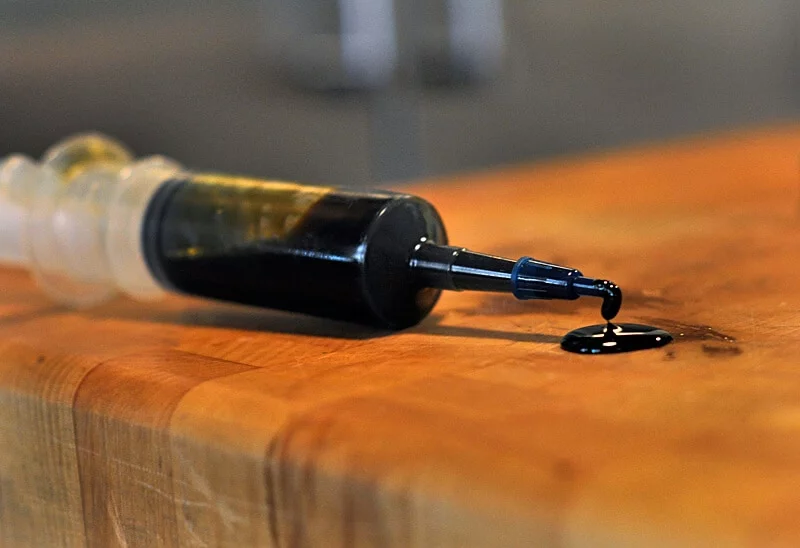

What Is RSO
What Is RSO
RSO (Rick Simpson Oil) is a thick, dark cannabis extract made by soaking cannabis in ethanol then evaporating the solvent down to a tar-like syrup. THC content runs 50-90%, you dose it by the size of a grain of rice (25-50 mg), and it’s used for sleep, pain, appetite, and as adjunct cancer therapy. Named after Rick Simpson who popularised it in the early 2000s. The oldest “wellness” cannabis extract — predates dabs, vapes, and most edibles.
What is RSO?
RSO is a full-extract cannabis oil. You soak dried cannabis in food-grade ethanol, strain the plant material out, then slowly evaporate the alcohol off until what’s left is a dark, sticky, tar-textured oil. The whole plant goes into it — cannabinoids, terpenes, plant waxes, chlorophyll. That’s why RSO is dark green-black instead of clear like distillate.
It’s named after Rick Simpson, a Canadian who started making and giving the oil away in the early 2000s after using it on his own skin cancer. His protocol is the one most users follow today.
 How is RSO different from regular cannabis oil?
 How is RSO different from regular cannabis oil?
Three main differences:
- Whole plant — includes everything, not just THC or CBD
- Higher concentration — 50-90% cannabinoids vs 10-30% in tinctures
- Decarboxylated — the evaporation step activates the THC, no decarb needed before use
RSO is closer to a cannabis tincture than to a vape distillate. Slow onset (45-90 min when eaten), long duration (6-8 hours), full-spectrum effect.
What dose do you start with?
The standard Rick Simpson protocol:
- Week 1-2: half a grain of rice, 3x/day (~10-15 mg total)
- Week 3-4: full grain of rice, 3x/day (~25-30 mg)
- Week 5+: scale up to 1 gram/day if tolerated (heavy users only)
The protocol assumes someone with serious medical need building tolerance over 90 days. Recreational users dose 25-50 mg once and call it a night.
What does RSO feel like?
Heavy. It’s a full-body sedating experience, way stronger than smoking the same THC amount because the edible metabolite (11-hydroxy-THC) is 3-5x more potent. Most users dose at night because they’re not going anywhere after.
The high lasts 6-8 hours. First-time RSO users at a normal recreational dose (25-50 mg) often describe it as “couch lock plus.” If you’ve eaten edibles before, RSO is similar but harsher — less precise dosing because you’re scooping a tar instead of a measured pill.
How do you take RSO?
Common methods:
- Oral — squeeze a grain-of-rice amount onto a piece of bread or food. Onset 45-90 min.
- Under the tongue — held sublingually for 60 seconds before swallowing. Onset 30-45 min, slightly faster.
- In a capsule — pre-loaded gel caps avoid the taste (RSO tastes terrible).
- Topical — applied directly to skin for localized skin conditions or pain. No systemic high.
You don’t smoke RSO. The ethanol production process leaves plant waxes that make for harsh smoke.
What is RSO used for?
Three main use cases:
- Sleep — heavy sedation, helps with chronic insomnia
- Pain — chronic pain management, especially nerve pain
- Cancer adjunct — Rick Simpson’s original use, used alongside conventional cancer treatment
The cancer use is the most controversial. There’s anecdotal evidence and some preclinical lab research showing cannabinoids affecting tumour cells, but no large human trials yet. RSO is not a cancer cure and shouldn’t replace conventional treatment.
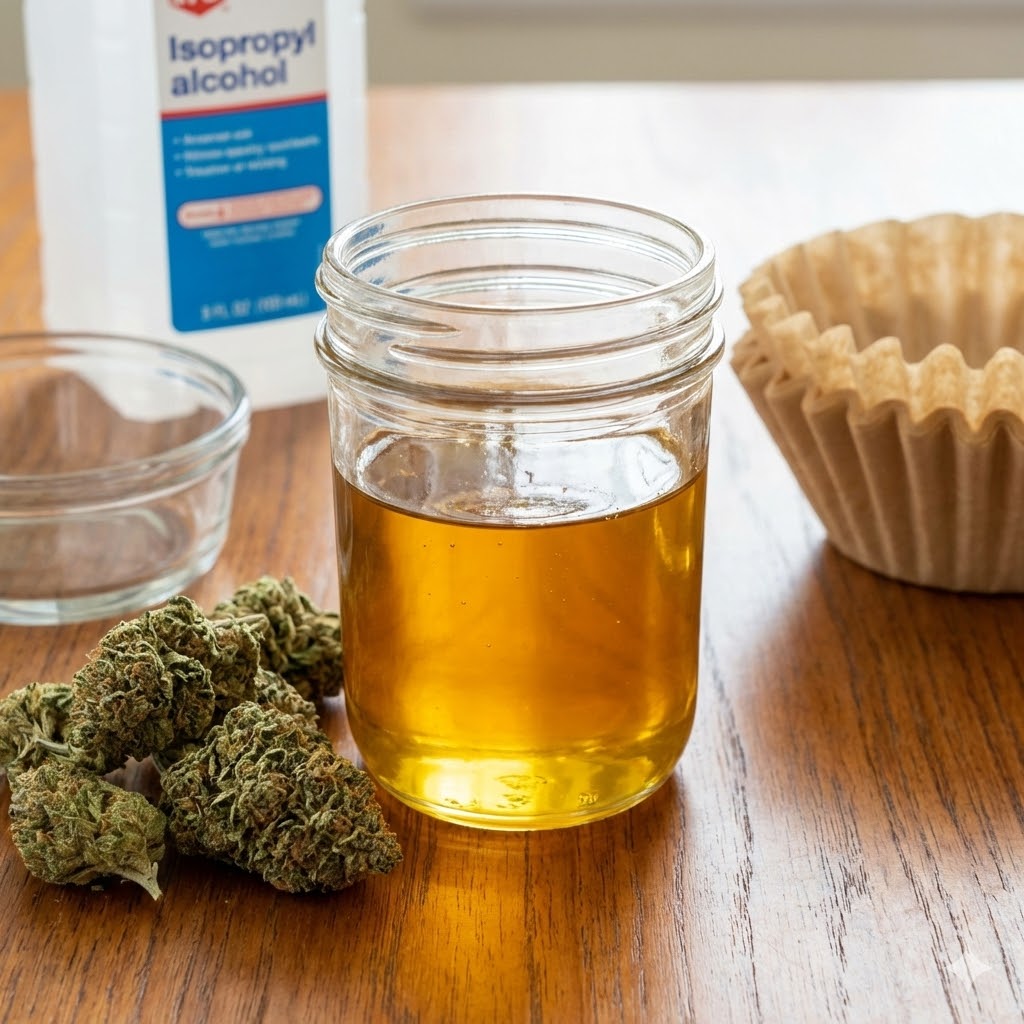
How is RSO made?
The basic process:
- Dry cannabis is broken up and put in a bucket or pot
- Food-grade ethanol is poured over it (covers the plant material)
- The mixture is stirred for 3-5 minutes to dissolve the trichomes
- The plant material is strained out, leaving green ethanol
- The ethanol is gently evaporated on low heat or in a rice cooker
- What’s left is dark syrupy oil — RSO
Production is slow and smelly. Most users buy it from licensed producers instead of making their own. Health Canada-licensed RSO products come in dosed syringes that make scooping a grain-sized amount easier than fishing it out of a jar.
What’s the difference between RSO and FECO?
FECO (Full Extract Cannabis Oil) and RSO are often used interchangeably. Technically:
- RSO — specifically follows Rick Simpson’s ethanol process
- FECO — any full-spectrum extract, can use ethanol or other solvents (CO2, butane)
In retail terms there’s no real difference. Both are dark, sticky, full-spectrum cannabis oils dosed by the grain of rice.
Is RSO safe?
RSO itself isn’t dangerous, but the dose is. A grain of rice can contain 25-50 mg THC. Eating a teaspoon by accident = 500+ mg, which puts even experienced users in the “I should have called in sick tomorrow” zone. Keep RSO away from kids, label it clearly, and never confuse it with regular cooking oil. Licensed products help — the syringes have dose marks.
Other safety notes:
- Residual ethanol from poorly purged batches can irritate the stomach
- Pesticide-contaminated input cannabis carries through into the oil concentrated
- Drug interactions matter — RSO + opioids = heavy CNS depression risk
Where to buy RSO in Canada?
RSO is legal and sold by licensed Canadian producers. Look for products labelled “full-spectrum oil” or “RSO” with the cannabinoid content per ml on the package. Health Canada’s cannabis regulations set the production rules.