
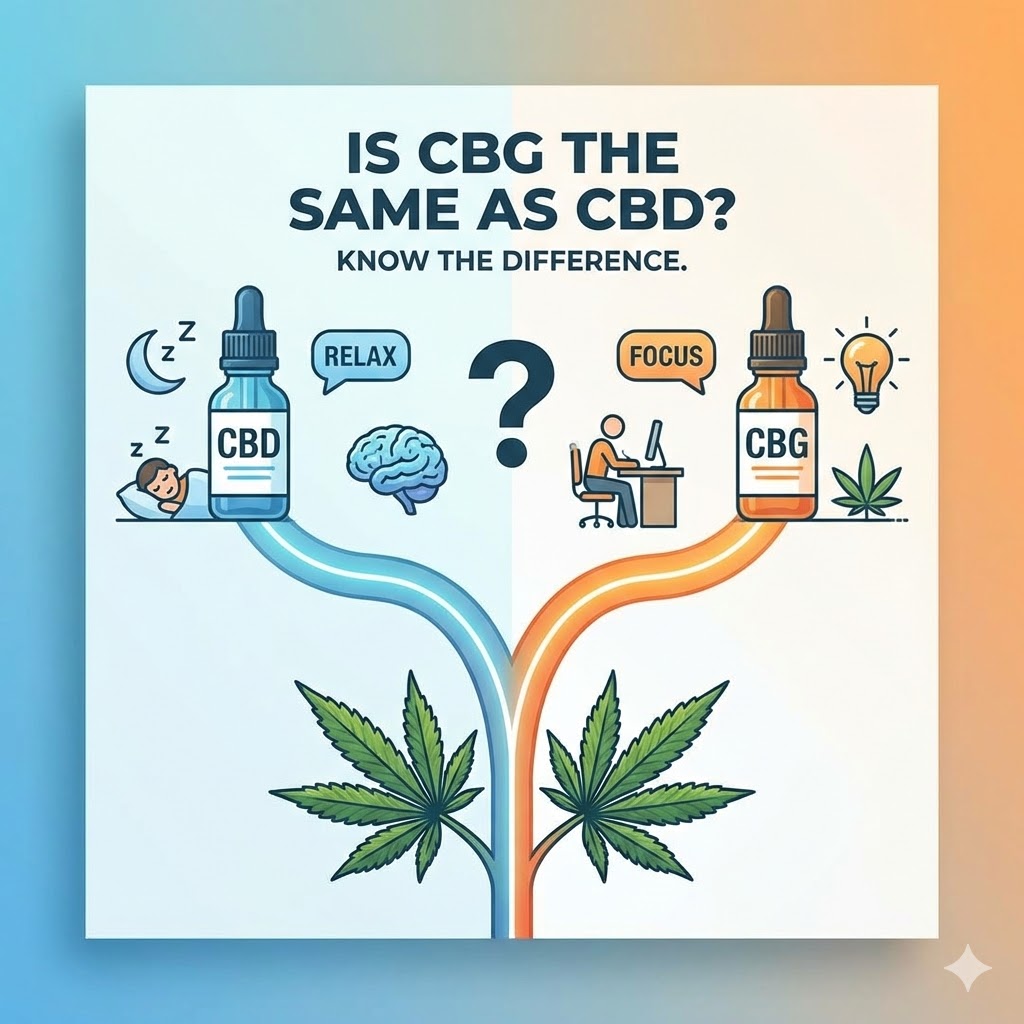

What Is CBG
What is CBG?
CBG (cannabigerol) is a non-intoxicating cannabinoid found in the cannabis plant. Its called the “mother cannabinoid” because all other cannabinoids (THC, CBD, CBC, CBN) start as CBGA and get converted as the plant matures. CBG itself stays in young plants and rare high-CBG strains. It binds CB1, CB2, and several non-cannabinoid receptors, with research interest in inflammation, eye pressure, antibacterial action, and gut health.
Most mature cannabis plants only contain 1% or less CBG by weight because the enzymes inside the plant convert CBGA to THCA, CBDA, or CBCA during flowering. To get useful amounts of CBG, growers either harvest early or use selectively bred high-CBG strains.
How does CBG work?
- CB1 receptor: Weak partial agonist. CBG binds but doesnt trigger the strong response THC does, so no high.
- CB2 receptor: Stronger agonist. Plays into anti-inflammatory and immune effects.
- Alpha-2 adrenergic receptors: Activates these, which is part of the calming and blood pressure effects.
- 5-HT1A serotonin receptor: Antagonist. May counter some of CBDs effects on this pathway.
- TRPV1, TRPA1: Activates these temperature/pain receptors, similar to capsaicin.
The receptor profile is different from THC and CBD. Thats why CBG produces a different effect even at high doses.
Does CBG get you high?
No. CBG is non-intoxicating. It binds CB1 weakly but doesnt activate it enough to produce the THC-style high. Users describe a clear-headed, lightly alert feeling without sedation or impairment. This makes CBG popular for daytime use and for people who want cannabinoid benefits without any cognitive effects.
What is CBG used for?
- Inflammation: Most-studied use. CBG reduces inflammatory markers in animal and early human studies, particularly for inflammatory bowel disease.
- Eye pressure (glaucoma): CBG lowers intraocular pressure similar to THC but without the high. Promising for glaucoma research.
- Antibacterial: Strong activity against MRSA in lab studies. Mechanism is being studied for potential antibiotic use.
- Appetite stimulation: Similar to THCs munchies effect but milder. Useful for chemo or wasting conditions.
- Mood: Some users report mild anti-anxiety effects without sedation. Less data than CBD on this.
- Bladder function: Small studies show smooth muscle relaxation in the bladder. Researched for overactive bladder.
- Neuroprotection: Animal models show CBG protects neurons in conditions like Huntingtons. Early research.
CBG vs CBD: what is the difference?
- Receptor binding: CBG hits CB2 stronger and alpha-2 adrenergic. CBD hits 5-HT1A and others.
- Effects: CBG is more alerting and focused. CBD is more relaxing and calming.
- Inflammation: Both anti-inflammatory but through different pathways.
- Cost: CBG is 3-5x more expensive per mg than CBD because of low natural yields.
- Availability: CBD is widespread. CBG is still niche.
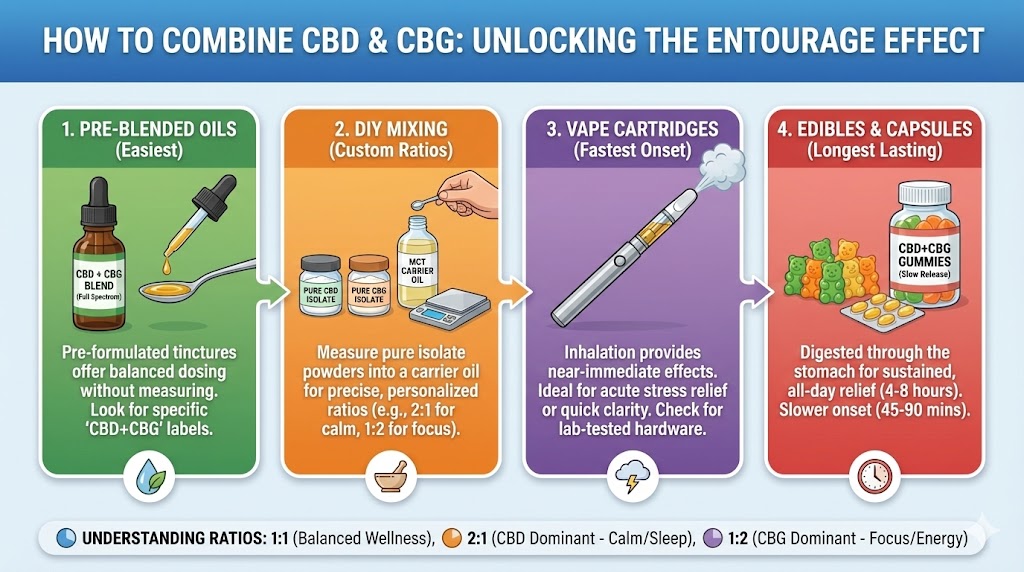
Many users stack CBG with CBD to combine the focus effect with the relaxation effect.
What dose of CBG is typical?
- Microdose (general wellness): 5-15 mg per day
- Standard dose (inflammation, mood): 25-50 mg per day
- Higher therapeutic dose: 50-100 mg per day, often split into 2-3 doses
Start at the low end and work up. CBG has a high safety margin but at higher doses some users report dry mouth, low blood pressure, or sleepiness.
What forms does CBG come in?
- CBG isolate: Pure CBG crystals, usually 99%+ pure. Tasteless, easy to dose.
- CBG tinctures: CBG in MCT or hemp seed oil. Sublingual absorption.
- CBG flower: High-CBG hemp strains, typically 8-15% CBG. Smoked or vaped.
- CBG capsules: Premeasured doses, slower onset due to digestion.
- CBG distillate: Concentrated CBG plus minor cannabinoids. Used in vape carts and full-spectrum products.
Is CBG legal in Canada?
Yes through licensed cannabis retailers, since CBG is a cannabis-derived cannabinoid regulated under the Cannabis Act. Hemp-derived CBG products with no THC also exist legally in some configurations. Quality control varies. Always check for a third-party COA.
Side effects of CBG
- Dry mouth – mild and common
- Drowsiness at higher doses
- Low blood pressure – notable in some users, watch if youre already low
- Drug interactions: CBG inhibits CYP450 liver enzymes similar to CBD, can affect drug metabolism
- Appetite increase – usually considered a benefit but worth noting
Why is CBG so expensive?
Two reasons. First, natural yields are low – typical cannabis plants finish flowering with under 1% CBG content because most of it has converted to other cannabinoids. Second, extracting pure CBG from those low-content plants requires more processing. High-CBG strains exist but are rarer and still less productive than CBD or THC genetics. Expect $30-60 per gram of isolate, vs $5-15 for CBD isolate.
CBG vs THC: what is the difference?
- Psychoactivity: THC binds CB1 strongly, CBG doesnt. THC gets you high, CBG doesnt.
- Eye pressure: Both lower intraocular pressure
- Anti-inflammatory: Both work, different pathways
- Appetite: THC stimulates appetite more aggressively. CBG is milder.
CBG is sometimes called “weed without the weed feel” because it gives some cannabis benefits with no intoxication.
Sources
- Brierley DI et al. – Cannabigerol pharmacology and clinical use (British Journal of Pharmacology 2016)
- Russo EB – Phytocannabinoid receptor binding profiles (Trends in Pharmacological Sciences)
- Health Canada – Cannabis Act regulation of minor cannabinoids