

What Is Temple Ball Hash? How It’s Made and How to Smoke It
Temple balls are the oldest form of hash still made the same way it was three hundred years ago: resin rubbed off living plants by hand, rolled into a sphere, and left to age. No screens, no ice water, no presses. If you have only ever had pressed blonde or bubble hash, a temple ball is a different thing entirely — softer, darker, and slower.
This is what they are, how they get made, and what to do with one when you have it.
What temple ball hash actually is
A temple ball is charas — hand-rubbed cannabis resin — that has been worked into a ball and cured. The tradition comes out of the Himalayan belt: Nepal, northern India, parts of Pakistan. Nepalese temple balls are the ones most people mean when they use the term.
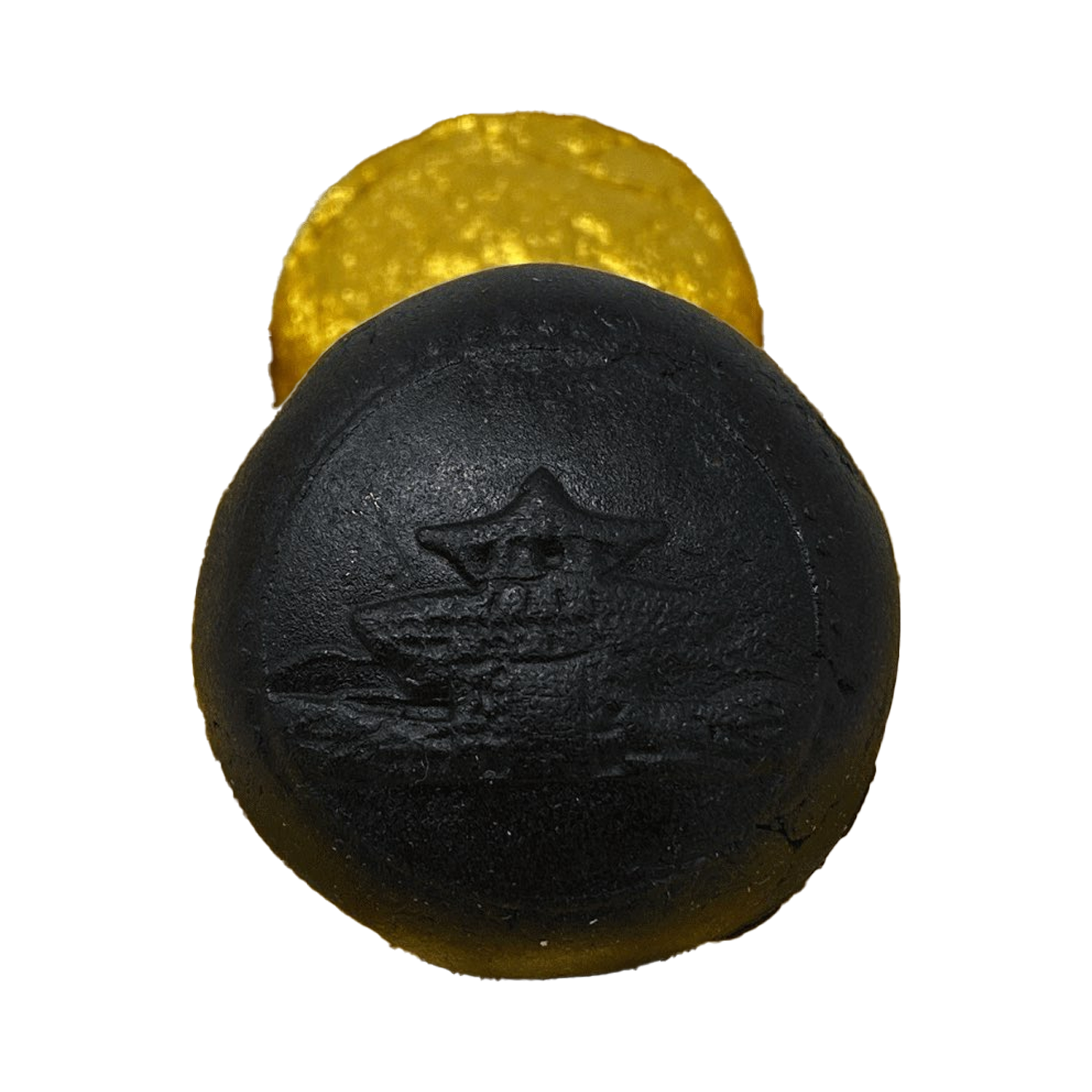
The name comes from the practice of offering them at temples, and from the shape. A finished ball is usually somewhere between a marble and a tennis ball, with a hard glossy shell and a softer, stickier interior. Cut one open and the inside looks almost like molasses.
What separates it from every other hash on the menu is the collection method. Nobody sieves anything. A worker walks through a standing crop and rubs live flowers between their palms until a layer of resin builds up on the skin, then scrapes it off. A full day of this produces a few grams. That is the entire reason temple balls cost what they do.
How temple balls are made
The process has four steps, and three of them are just waiting.
Hand-rubbing. Fresh, living plants get rubbed between the palms. Because the plant is alive and the resin is warm, what comes off is a sticky black paste rather than loose powder. This paste already contains a bit of plant material, which is part of why charas tastes different from sifted hash.
Rolling. The paste is worked and compressed by hand into a sphere. Rolling drives out air and forces the resin into a dense mass. The outside gets burnished as it is handled, which is where the shine comes from.
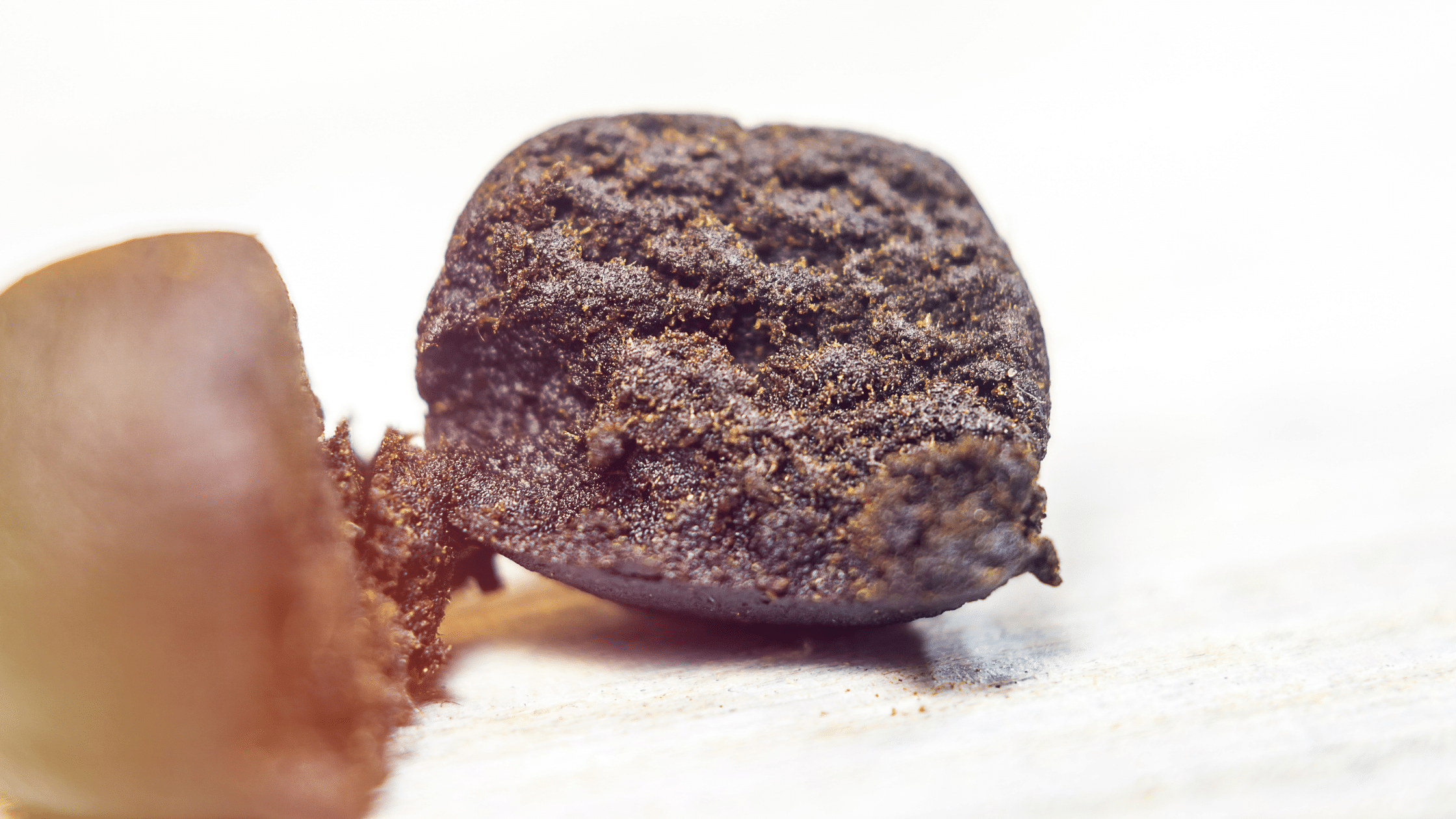
Wrapping and curing. The ball is wrapped — traditionally in cellophane or leaves — and stored. This is where the real change happens. Over months, the ball darkens and the harsh green notes of fresh resin fade out. Terpenes oxidize into something rounder and more spiced.
Aging. Good temple balls keep improving for years. A well-made ball aged two or three years is a genuinely different product than the same ball at three months — smoother, more complex, less of the raw plant.
Temple ball vs. other hash
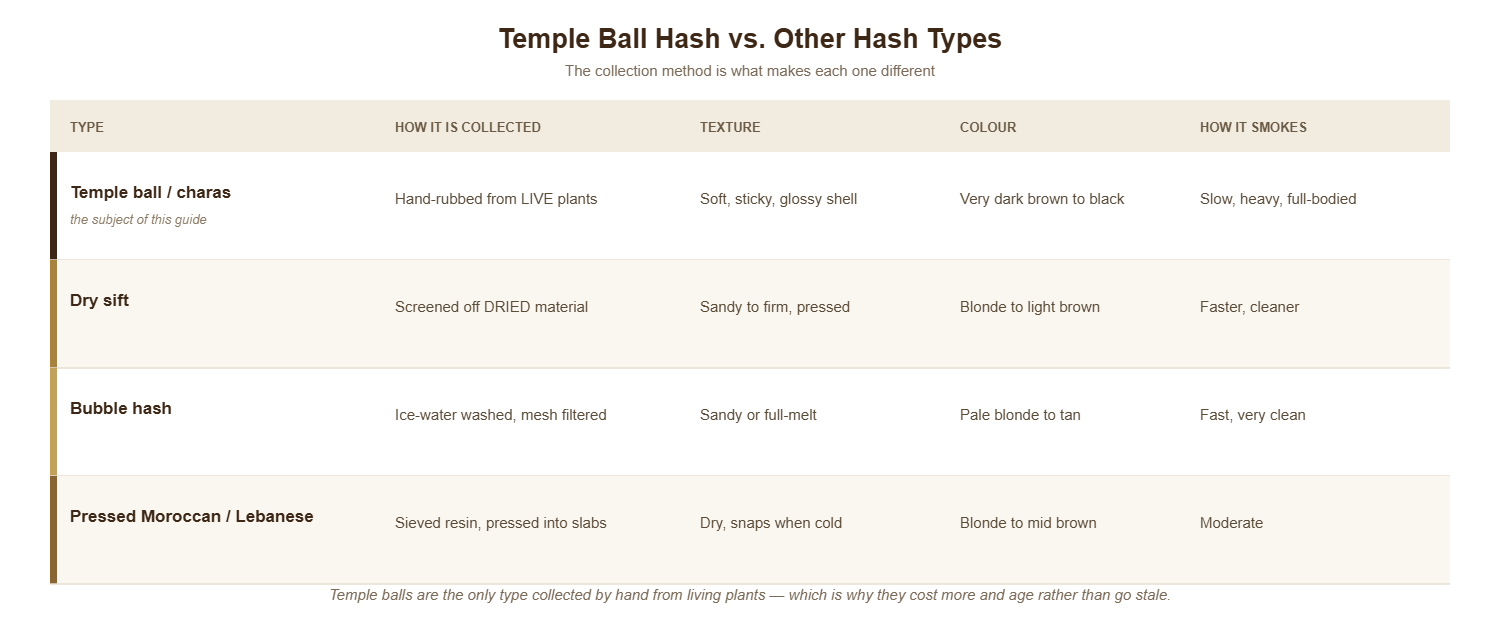
Here is where each one sits, since these get mixed up constantly:
- Temple ball / charas — hand-rubbed from live plants, rolled, aged. Soft, dark, glossy. Full-bodied and slow.
- Dry sift — trichomes screened off dried material, then pressed. Cleaner and lighter in colour, faster onset.
- Bubble hash — trichomes washed off with ice water and filtered through mesh bags. The most solventless-purist option, often sandy or full-melt.
- Pressed Moroccan or Lebanese — sieved resin pressed into slabs or stamped bricks. Usually blonde to brown, drier, snaps when cold.
The practical difference for most people is texture and pace. Sift and bubble hit quicker and cleaner. Temple balls come on slower and sit heavier. Neither is better — they are different experiences, and a lot of people who like one do not much like the other.
How to tell a good one
Four things worth checking:
It softens in your hand. Body heat should make a genuine temple ball pliable within a minute or so. If it stays hard as a rock, it is either very dry, very old, or cut with something.
The outside is glossy, the inside is not. That shell comes from handling and oxidation. Break a piece off — the fresh surface should be duller and darker, with a slight tack to it.
It smells like plant, not like nothing. Aged charas has a deep, spiced, slightly leathery smell. A ball with no smell has usually been overheated or badly stored.
It burns rather than smoulders into ash. Heat a crumb with a flame. Real resin bubbles and releases smoke. Heavy adulteration tends to just char.
How to smoke temple ball hash
The mistake almost everyone makes the first time is treating it like flower and using too much. Temple ball is dense — a piece the size of a grain of rice is a reasonable starting point for one person.
Warm it first. Hold the piece between your fingers for thirty seconds, or hold it near a flame without touching. Warm resin crumbles and spreads; cold resin just smears.
In a joint or spliff. The traditional approach. Crumble the warmed piece and mix it through your flower, or roll it into a thin snake and lay it along the length. Mixing matters — a solid lump in one spot will run and go out.
In a pipe or bong. Put a screen in first, or the resin will melt straight through. A small crumb on top of a half-packed bowl of flower works better than hash on its own, since the flower gives it something to burn against.
In a vaporizer. Only if yours takes concentrates — you need a mesh insert or a concentrate pad. This is the cleanest way to taste an aged ball, because you are not burning off the terpenes you paid for. Start around 190–210°C.
Hot knives. Old method, still works, still messy. Two heated blades, a crumb pressed between them, inhale the vapour through a cut bottle. Not elegant, but it does not waste anything.
Whatever method you use, wait. Hash comes on slower than most people expect, and the second serving that felt necessary at ten minutes usually was not.
Storing it
Airtight, cool, dark. A small glass jar in a cupboard is fine. Do not refrigerate — condensation is worse for resin than room temperature, and moving it in and out of the cold repeatedly will dry the surface and crack the shell.
Wrapped properly, a temple ball does not really go off. It keeps aging. A ball you put away this year will be better in two years than it is today, which is not something you can say about flower.
Where to start
If you have never had hand-rubbed hash, start with a gram and give it a couple of sessions before deciding. The first time is usually spent adjusting to how little you need.
You can see what we currently have on the hash menu — temple balls, Nepalese charas, and the sieved and washed styles alongside them. If you are still working out which type suits you, our guide to getting hash in Canada covers the differences in more detail, and there is more on handling and storage over on the blog.