












Two Different Hashes Share the Name Finger Hash
Ask for finger hash and there are two things you could mean. The first is the resin a trimmer scrapes off their fingers after a harvest. The second is hand-rubbed hash, made by rubbing the living plant between the hands. That second one is what shows up on dispensary menus, and it’s the only kind we sell.
The trim room kind
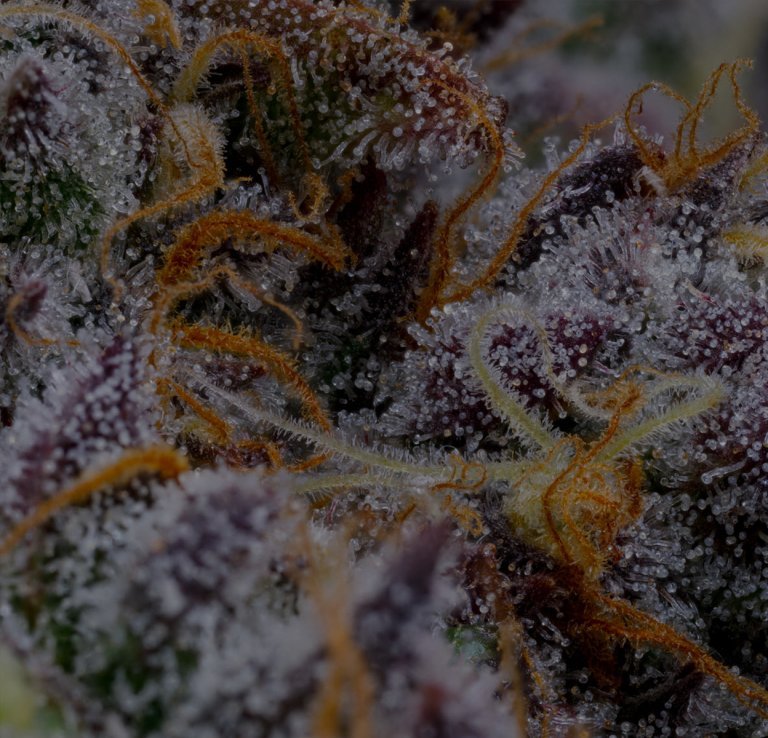
Trimming freshly grown buds is messy work. Resin from the trichomes sticks to your hands and builds up on the scissor blades, and on gloves too if you wear them.
Within a few hours that resin turns into a tacky coating, and trimmers scrape it off. Growers call it finger hash because it collects on the fingers and hands. It also goes by scissor hash, since it builds up on the shears as well.
Some trimmers keep theirs. It burns fine but can be a bit harsh, and its resin mixed with alot of impurities, so it’s nothing like hash made on purpose.
So why don’t you see it for sale?
Each trimmer only ends up with a small amount and it isn’t clean, so it normally stays with whoever did the trimming. We don’t stock it. When a menu lists finger hash, it almost never means this.
The hand-rubbed kind
The finger hash you buy is charas. The big difference is the plant. Most hash is made from cannabis that was cut and dried, but charas comes from living plants that are still flowering.
The farmer takes a bud between their palms and rubs it gently back and forth, then moves on to the next one. Bit by bit a dark layer of resin builds up on the skin. When it’s thick enough it gets scraped off the hands and rolled together. That’s the whole method. It’s slow, labour-heavy work, and one person doesn’t get much resin out of a day of it.
This is how people make hash by hand in the Himalayan range. Northern India is the best known source, mainly Himachal Pradesh and the Parvati Valley, and Kashmir is charas country too. Nepal has the same tradition. So if you searched for Kashmir hash, you’re already in the right family.
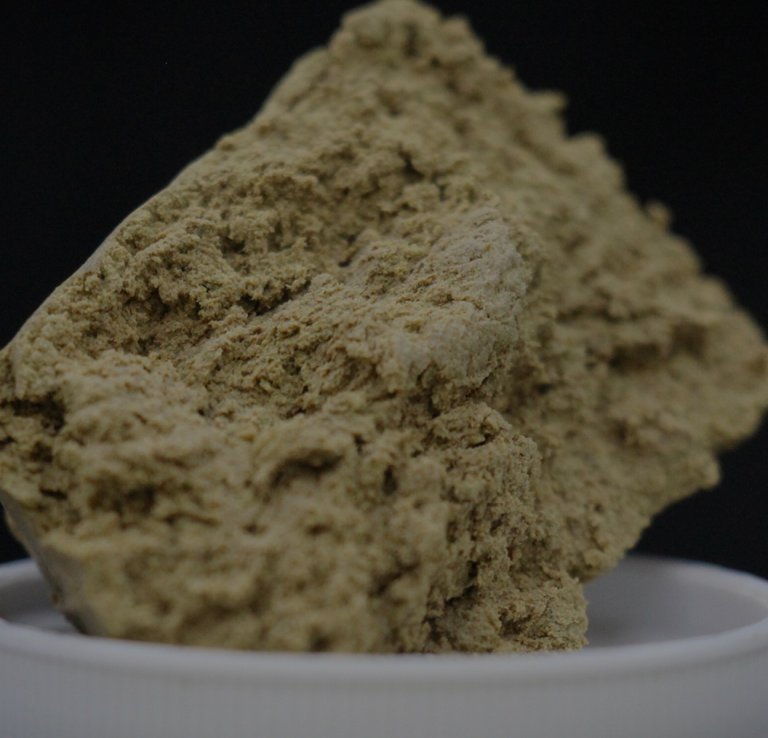
Why is it soft and dark? Part of it is the fresh plant. Nothing was dried first, so the resin keeps alot of the light, volatile terpenes that drying usually drives off. The rest is the hands. Gentle pressure and warmth from the rubbing pull the resin off the flowers and bring it together in one dark, sticky lump. Good charas is dark brown to black on the outside, often lighter inside, and it bends like modelling putty instead of snapping.
Then there’s the shape.
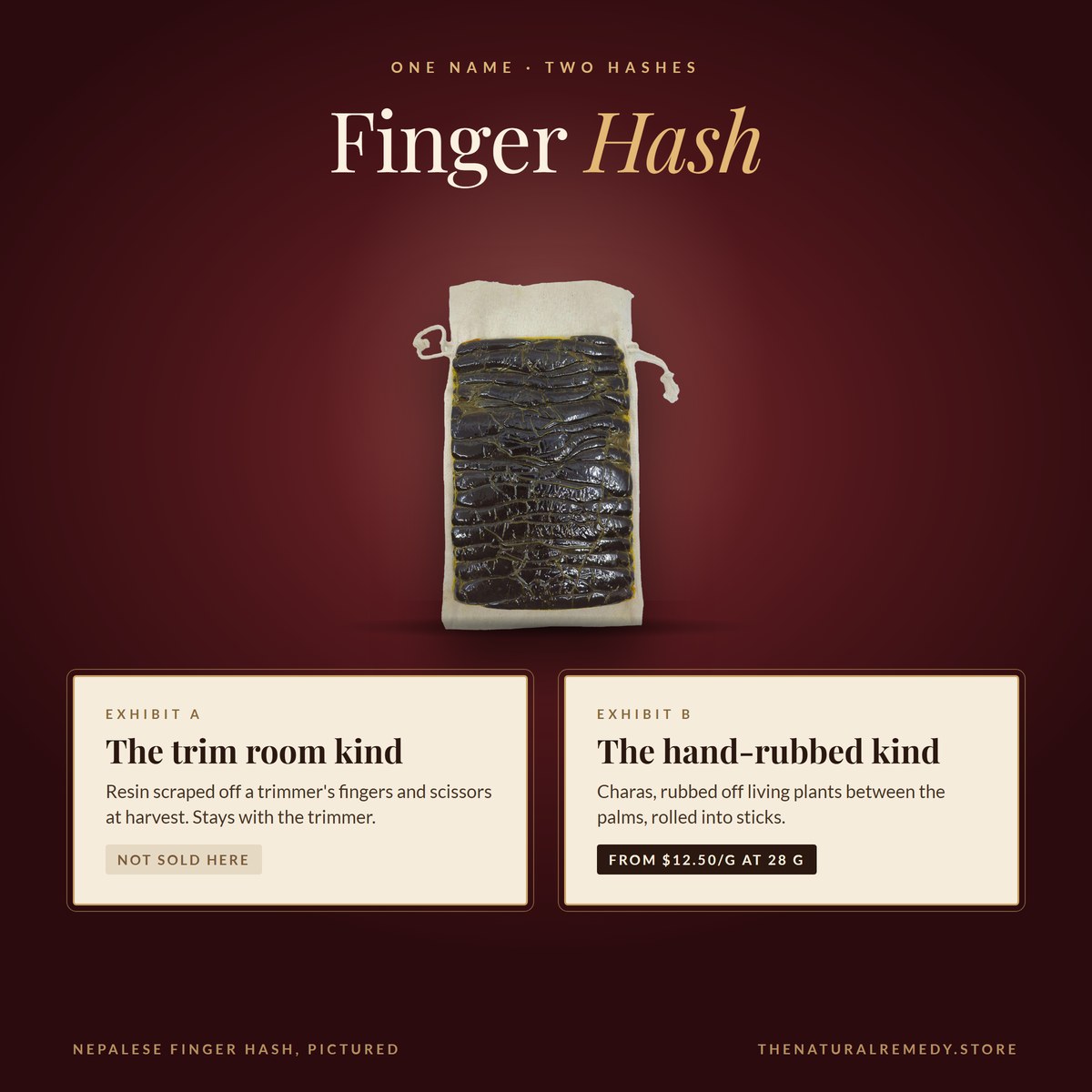
In India, charas is usually rolled into dark sticks, often called fingers. Nepal is better known for temple balls, rolled round and polished until the surface is smooth and shiny. Both are hand rolled hash from the same rubbing method, just finished two different ways. Our Nepalese Finger Hash is listed as finger-rubbed and hand-rolled, which is exactly what the name should mean.
Rubbed vs sieved
Moroccan and Afghan hash both start from dried plants. Moroccan hash is made by beating the dried flowers over fine screens so the resin falls through as powder, and that powder gets pressed into blocks. Afghan hash is sieved first too. The dried crop is threshed and sifted into a powder called garda, which then gets dampened, warmed and kneaded by hand or pressed. Afghan gets worked a lot, but it started as sieved powder, not as resin rubbed off a living plant.
Hand-rubbed hash on our shelf
Prices are from today, November 18, 2026, and the per gram numbers are worked out from each size. Where a listing names a country or a method we say “listed as”, since we can’t walk the farm ourselves.
- Nepalese Finger Hash: 3.5 g $70 ($20.00/g), 7 g $120 ($17.14/g), 14 g $220 ($15.71/g), 28 g $350, down from $395 ($12.50/g). Listed as finger-rubbed off live plants in Nepal, with a soft, oily texture that gets gooey when warm.
- Kashmir Hash: 3.5 g $65 ($18.57/g), 7 g $110 ($15.71/g), 14 g $175 ($12.50/g), 28 g $330 ($11.79/g). The listing doesn’t say how this batch was made. It’s listed as smoky and spicy, and as a rarer cousin of Red Lebanese.
- Black Bombay Indian Hash: 3.5 g $60 ($17.14/g), 7 g $100 ($14.29/g), 14 g $180 ($12.86/g), 28 g $340 ($12.14/g). Listed as hand-pressed, black outside and dark brown inside, medium soft and sticky.
- Charas Temple Coins Hash: 1 coin $240, 2 coins $400. The listing puts each coin at 28 g, which works out to $8.57/g for one and $7.14/g for two. Listed as rubbed from live flowers in the Himalayas, with a sticky, malleable texture.
- Nepalese Temple Balls: one 50 g ball $400, down from $450 ($8.00/g), or two balls for $750, down from $900 ($7.50/g). Listed as hand-rubbed in the Nepal highlands and rolled into glossy, sticky spheres.
- Temple Ball Öm Hash: 3.5 g $75 ($21.43/g), 7 g $140 ($20.00/g), 14 g $250 ($17.86/g), 28 g $425 ($15.18/g). Listed as hand-rolled, not pressed, with a glossy dark brown shell and a soft, oily inside.
The coins and the balls are the cheapest per gram, but you’re buying 28 to 100 grams at once. For a first try, an eighth of the finger hash or the Kashmir is the easier way in.
One honest note. Black Bombay is listed as hand-pressed, and the Kashmir listing doesn’t mention a method at all. If hand-rubbed is the whole point for you, stick with the finger hash, the coins or the two temple ball options, because those listings say it outright.
Keeping it soft
Hand-rubbed hash loses it’s flavour if it sits open to the air. Keep it in an airtight jar somewhere cool and dark, since heat, light and oxygen all break down the terpenes and cannabinoids over time. Our hash storage post covers wrapping and when the fridge is worth it.
Everything else we carry, sieved and pressed styles included, sits in our full hash category.