

How to Make Cannabutter
Last updated: June 28, 2026
What is cannabutter and why bother making it?
Cannabutter is regular butter infused with cannabis. THC is fat-soluble — it binds to the milk fat in butter, letting you use it as a cooking ingredient in any recipe that calls for butter. Brownies, cookies, pasta sauce, mashed potatoes, popcorn, anything. Made properly it’s the foundation for almost every homemade edible. Made improperly it’s a waste of flower and produces weak, grassy-tasting results.
The two things that make or break your batch
Decarboxylation: Raw cannabis contains THCA, not THC. THCA doesn’t get you high. Heat converts THCA to active THC through decarboxylation. Skip this step and your butter contains mostly non-psychoactive THCA. Do it wrong and you burn off the THC you’re trying to make.
Infusion temperature and time: Too hot destroys cannabinoids and terpenes. Too cold and cannabinoids don’t fully transfer to the fat. The sweet spot is 160-200°F (71-93°C) for 2-3 hours.
Decarb temperature and time
Spread ground flower on a parchment-lined baking sheet in a single layer. Preheat oven to 240°F (115°C). Bake for 40 minutes. Stir once at the 20-minute mark. The flower should turn from bright green to slightly browned and smell strongly of cannabis.
Higher temp (280°F) works but risks scorching terpenes and losing THC. Lower temp (220°F) needs longer time (50-60 minutes). Check every 10 minutes if you don’t have an oven thermometer.
The 1:1 basic recipe
- 1 cup (2 sticks / 227g) unsalted butter
- 1 cup water
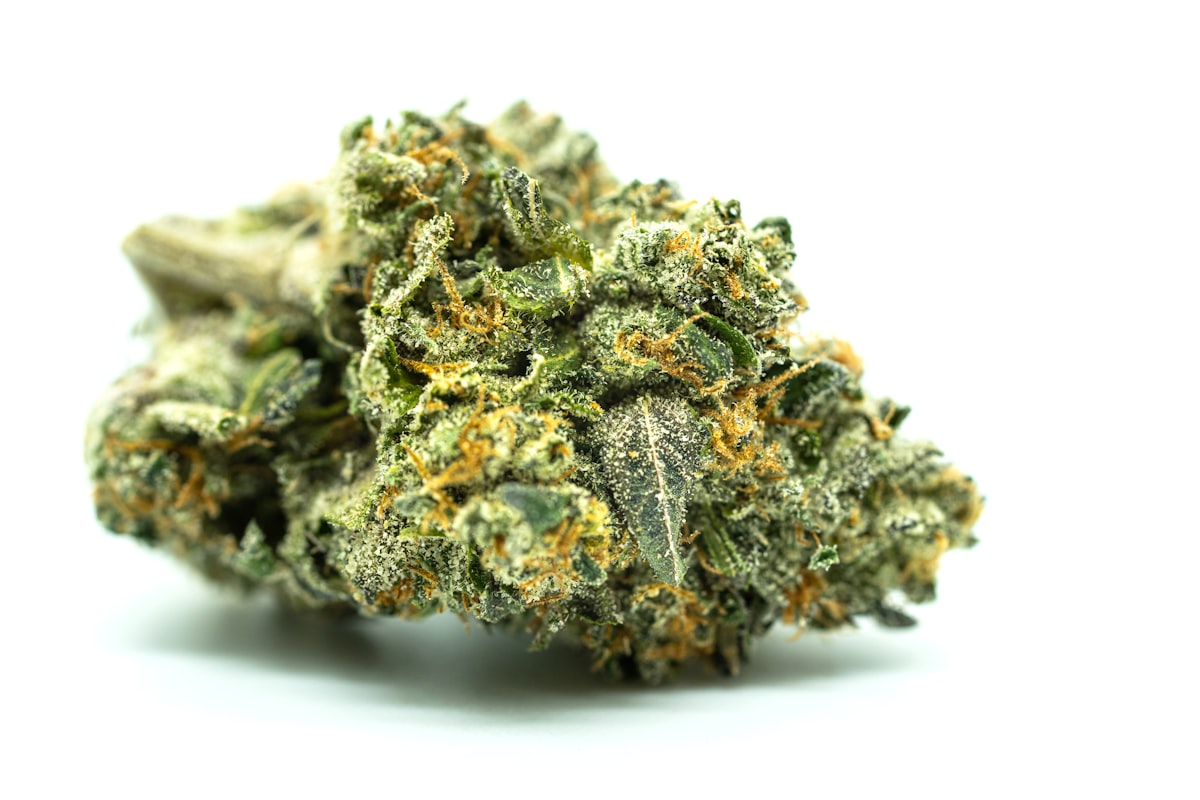
- 1 oz (28g) decarboxylated flower — OR 1/4 oz (7g) for milder butter
- Cheesecloth for straining
Melt butter with water in a saucepan over low heat. Water prevents scorching. Add decarbed flower once butter is fully melted. Bring to a bare simmer (small bubbles at the edges only). Cover partially and hold at 160-200°F for 2-3 hours. Stir every 30 minutes.
Strain through cheesecloth over a bowl. Refrigerate the strained liquid. Butter solidifies on top; water separates below. Peel butter off, wipe underside dry, transfer to container.
Potency math
If your flower tests at 20% THC (200mg per gram) and you use 28g:
- Total THC in the batch: 5,600mg
- Decarb loss (~10-15%): ~4,900mg active THC
- Infusion loss (~15-25%): ~3,900mg reaches the butter
- Per cup of butter: ~3,900mg
- Per tablespoon: ~244mg
- Per teaspoon: ~81mg
Standard edible dose is 5-10mg for beginners, 10-25mg for regular users. Each tsp of this butter contains 3-16 doses. Use tiny amounts in recipes and calculate per-serving.
For milder butter, use 7g of 20% flower — comes in around ~1,000mg per cup, or ~20mg per tsp. Much easier to portion.
How to dose recipes correctly
Biggest mistake: assuming all portions of a batch are equally potent. THC binds to fat pockets, and without thorough mixing, one brownie could have 3x the dose of another. Solution: mix your infused butter into ALL wet ingredients FIRST, then combine with dry.
For gummies and beverages, use tinctures or distillate instead — cannabutter is for baked/cooked recipes with fat as the carrier.
Storage and shelf life
- Fridge, airtight container: 4-6 weeks
- Freezer, portioned into tbsp ice-cube-tray portions: 6-12 months
- Room temperature: 2-3 days max
Freeze in single-tbsp portions. Pop one cube per recipe, no waste, always fresh.
Slow cooker method
If your stove runs hot or you can’t hold a steady simmer, use a slow cooker on LOW. Same butter+water+decarbed-flower ratio. 4-6 hours on LOW. Stir every hour.
Use trim and shake, not premium buds
Cannabutter is the best use for shake, trim, and popcorn buds — you’re extracting cannabinoids into fat, so quality matters less than with smoking. Save premium buds for smoking. Use leftovers for butter. Math still works with 10-15% THC trim.
Common mistakes
- Skipping decarb: weak butter, mostly non-psychoactive
- Boiling the infusion: destroys THC and terpenes, harsh butter
- No water: butter scorches at pan bottom
- Not straining fully: 20-30% of potency stays in plant matter
- Guessing the dose: start with 1/4 tsp per recipe portion for first batch